Listen, I’ve spent more hours in screen printing shops than I care to admit. I’ve breathed in the smell of curing PVC and I’ve wiped more stray ink off my forehead than a professional painter. If there is one thing I’ve learned in this messy, beautiful business it is that “standard” is the enemy of “sold out.”
Everyone does green glow. It’s fine. It’s safe. It’s also a bit boring. Actually, when you walk into a pitch-black room wearing a glow-in-the-dark shirt, you almost always expect that ghostly green hue. It’s the default; the color of radioactive waste in those 90s cartoons. But orange? Orange is the wildcard. It’s unexpected, neon, and high-energy.
The guys over at our Plastisol Ink Wholesale division have been seeing a massive spike in orders for this specific shade lately. Why? It’s simple. People in the EDM festival scene, those organizing night-run marathons, and the creative directors at high-end streetwear brands are just flat-out tired of the same old look. They are hunting for that “fire” effect.
The Psychology of the Glow
Think about it—orange naturally screams enthusiasm and creativity. When it’s glowing in total darkness, it looks like molten lava or a sunset that simply refuses to quit. The truth is, if you’re printing for a brand that wants a premium feel, you’ve got to offer colors that actually look expensive.
| Feature | Standard Green Glow | HONG RUI SHENG Orange Glow |
| Rarity | High (Common) | Low (Unique) |
| Visual Impact | Expected | High Surprise Factor |
| Market Value | Commodity Pricing | Premium/Specialty Pricing |
| Charge Time | 5-10 Minutes | 15-20 Minutes (Sunlight/UV) |
The Technical “Magic” Behind the Orange
I’ve had plenty of printers call me up frustrated because their glow ink looks like mud. Here is the cold, hard truth: glow ink is translucent. If you try to print orange glow directly onto a black t-shirt, you’re going to see… well, absolutely nothing.
To get that vibrant, “hit-you-in-the-face” orange, you absolutely need a foundation. Think of it like painting a house; you wouldn’t dream of putting a bright yellow over a dark brown without using a primer first. It’s the same logic here.
The Mandatory Underbase
You must use a White Plastisol Ink as your base layer. This white layer acts like a mirror, reflecting the light back through the glow pigment to make the orange pop. Without it, the fabric just drinks up all that luminescent energy.
Mesh Counts: The “Thick” Rule
Glow pigments are literal crystals. They are larger than standard pigment particles. If you try to push this ink through a 305 mesh screen you will have a bad time. You’ll clog your screen and you’ll probably want to throw your squeegee out the window.
I recommend an 86 to 110 mesh. You want a thick deposit of ink. The thicker the ink layer the more light it can store and the longer it will glow. It’s simple physics but it’s the step most people skip to save a few cents.
Production Cheat Sheet: How to Print Like a Pro
If you want to avoid the “cracking” and “peeling” nightmares that haunt screen printers follow this guide. I’ve made these mistakes so you don’t have to.
1. The Print-Flash-Print Method
Don’t try to get all the ink down in one pass.
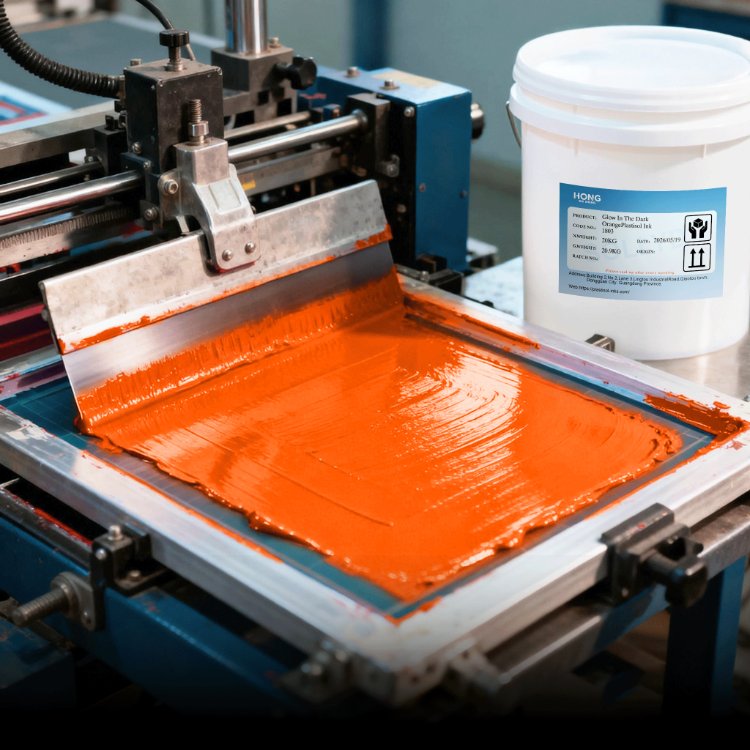
Print your white underbase.
Flash cure it until it’s tacky but not fully dry.
Print your orange glow ink.
Flash again if you want a second “hit” for extra brightness.
2. Curing Temperatures
Plastisol is a plastic resin. It needs to hit a specific temperature to “fuse.” For our Screen Printing Plastisol Ink that temperature is 320°F (160°C).
Pro Tip: Use a laser temp gun. Don’t trust the dial on your dryer. If the core of the ink doesn’t reach the temp it will wash off in the first laundry cycle and your customer will call you crying.
3. Squeegee Choice
Use a 60 or 70 durometer squeegee. A softer blade allows you to “lay down” more ink. We aren’t doing high-detail halftones here; we are building a reservoir of light.
Comparative Analysis: Orange vs. Other Specialty Inks
| Ink Type | Best Use Case | Glow Duration | Difficulty Level |
| Orange Glow | Streetwear & Festivals | 4-6 Hours | Moderate |
| Puff Ink | 3D Textures | N/A | Easy |
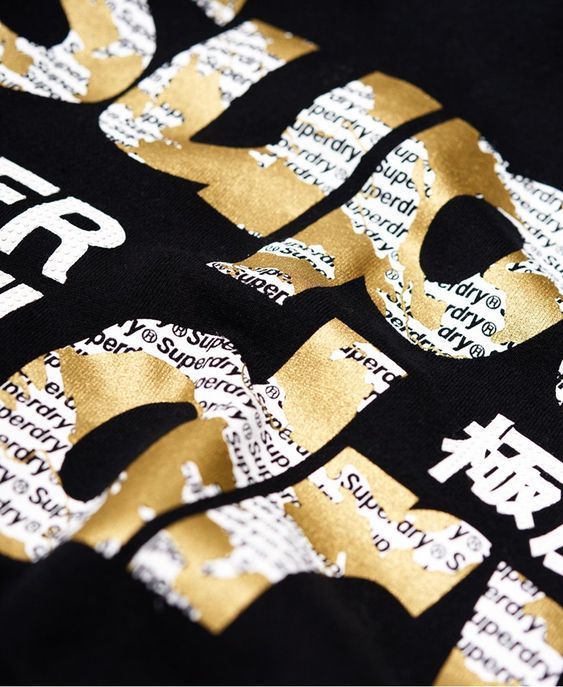
| Metallic Gold | Luxury Branding | N/A | Moderate |
| Glow Green | Safety & Novelty | 8+ Hours | Easy |
The Business Case: Why Your Clients Will Pay More
I’ve sat across the desk from apparel brand owners who are penny-pinching. They want the cheapest price possible. But when I show them a sample of a Puff Plastisol Ink mixed with a Glow Orange hit they stop talking about price.
Specialty inks move the conversation from “How much per shirt?” to “How cool is this brand?”
Case Study: The “Midnight Run” Success
A local 5K race organizer once approached a client of mine looking for shirts for a night run. My client offered standard reflective ink, but he also showed them a sample of our Orange Glow. The organizer was so floored by the look that they ordered 5,000 units on the spot and happily paid a $2.50 premium per shirt. Just by suggesting the right ink, my client cleared an extra $12,500 in profit. That’s the power of offering something different.
Frequently Asked Questions (FAQ)
1. Does the glow ever “wear out”?
The phosphorescent particles in our ink are built to last. You can “charge” and “discharge” them thousands of times without an issue. In most cases, you’ll find the t-shirt fabric itself wears out long before the glow actually fades.
2. Is it safe for children’s clothing?
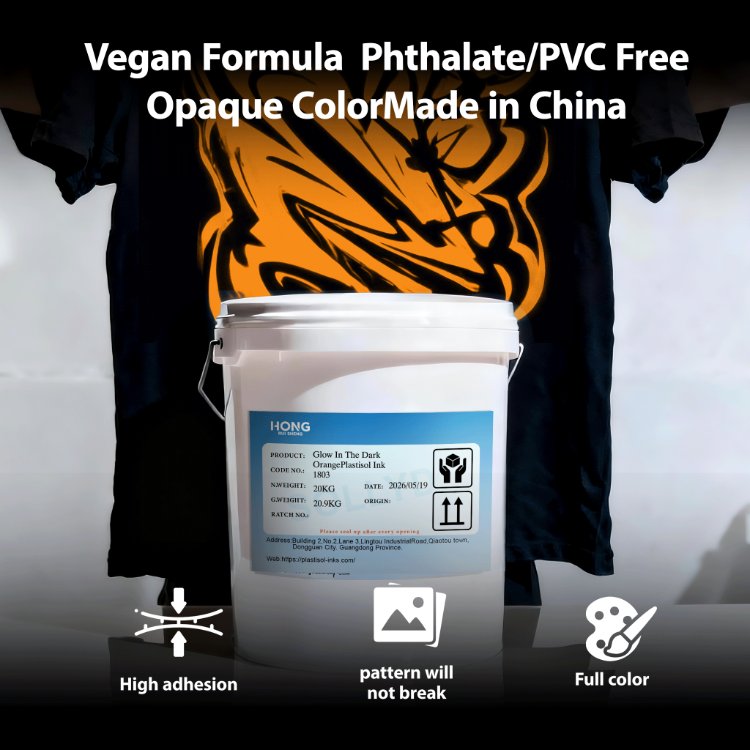
Absolutely. Our Phthalate-Free Plastisol Ink is manufactured to meet very strict safety standards. We make sure the formula is non-toxic and skin-friendly because, let’s be honest, nobody wants a lawsuit with their t-shirt order.
3. Got a trick to make the glow last longer on the garment?
The best way is to tell your customers to charge the shirt under direct sunlight or a strong UV light. While standard indoor LED bulbs will work, they won’t give you that intense, “nuclear” glow that a bit of time in the sun provides.
4. Can I mix orange glow with other colors?
You can but be careful. Adding too much standard pigment will “mask” the glow particles. It’s best to use it as a standalone top layer or mix it with very small amounts of transparent tints.
5. Why is orange glow more expensive than green?
The minerals used to create the orange spectrum are rarer and more difficult to process than the standard zinc sulfides used in green glow. It’s a premium product because it uses premium chemistry.
Final Thoughts from the Shop Floor
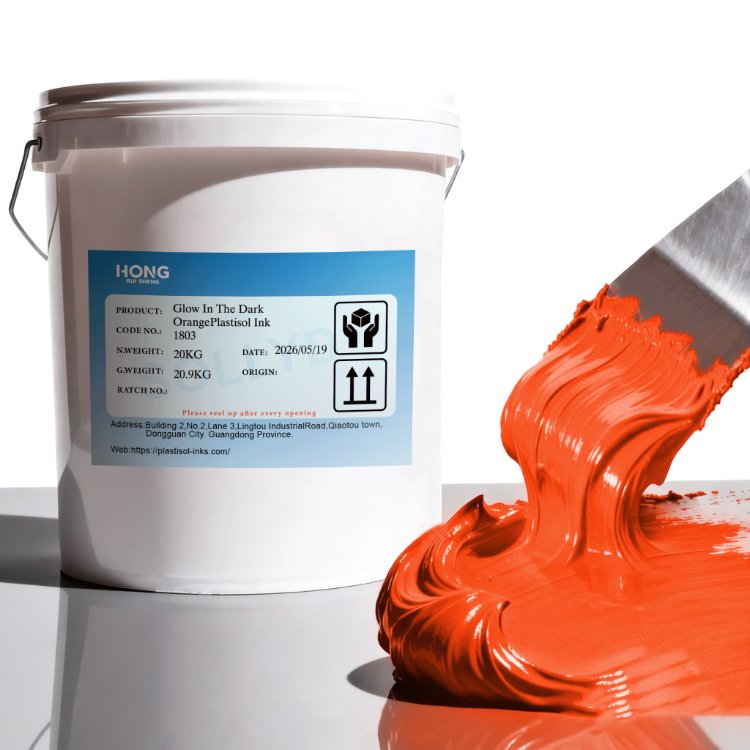
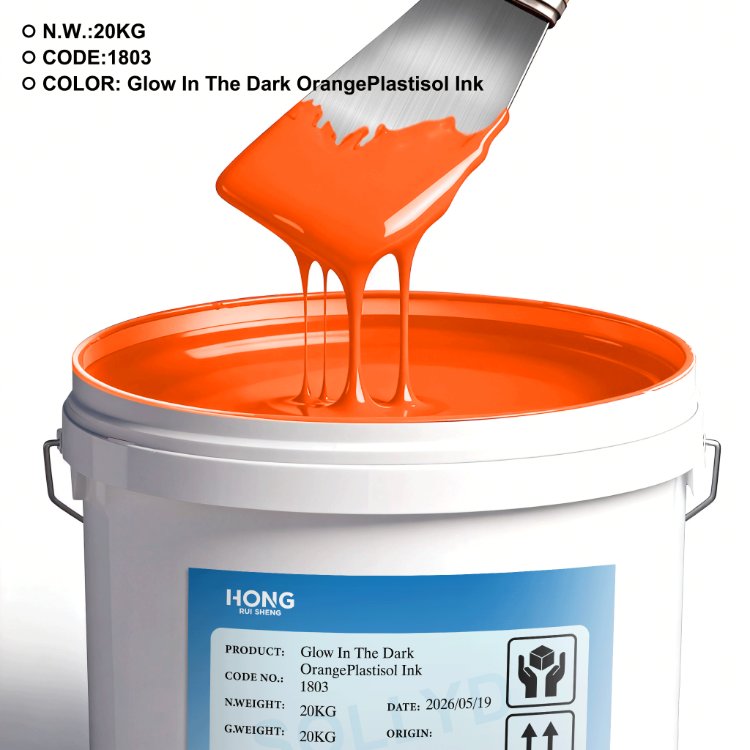
Look, I know that switching inks can be a pain. You have to clean the screens, dial in the dryer, and justify the cost to your bookkeeper. But the Glow In The Dark Orange Plastisol Ink from HONG RUI SHENG isn’t just another bucket of goop on your shelf. It’s a tool to make your customers stand out in an incredibly crowded market.
It’s a straightforward way to command higher prices for your work. And honestly? There’s something really satisfying about seeing that orange fire glowing in the dark at the end of a long production day. Don’t settle for the same old green. Be bold. Go orange.
Related products
- Special Series
Glow In The Dark Pink Plastisol Ink
- Special Series
Glow In The Dark Yellow Plastisol Ink
- Special Series
Elastic Screen Printing Ink Plastisol
- Special Series
Metallic Gold Screen Printing Ink