
Table of Contents
Yes, plastisol ink can work well for EU textile printing. But you need the right formula, the right documents, and the right production control.
If you buy plastisol ink for T-shirts, sportswear, socks, gloves, workwear, or other printed fabric products, don’t stop at “phthalate-free.” Ask for the SDS, REACH declaration, SVHC statement, phthalate test report, batch details, and finished-print test support.
At HONG RUI SHENG, we make Plastisol Ink for industrial and commercial screen printing. From our experience, EU buyers don’t just want bright colors and strong opacity. They also want fewer compliance headaches. When you check the ink before production, you reduce shipment risk, protect your buyer relationship, and make bulk printing smoother.
For most EU orders, I’d start with a controlled plastisol ink system and confirm every document before approving the bulk batch.
Why EU buyers care about REACH
REACH is not just a “certificate.” It is the EU chemical regulation that affects substances, mixtures, and articles. For textile buyers, the printed garment matters because it enters the EU market as a finished article.
One key point is the 0.1% weight by weight threshold for substances of very high concern in articles. REACH Article 33 explains the duty to communicate information on substances in articles when a Candidate List substance is above that level.
Phthalates also matter. Regulation 2018/2005 covers DEHP, DBP, BBP, and DIBP and sets a 0.1% limit by weight of plasticised material for certain articles. The regulation also includes printed designs and inks in the plasticised material scope.
That is why EU buyers ask hard questions. They don’t want a nice sample that later fails a chemical review.
Why choose plastisol ink for EU textile printing?
A good plastisol ink still has strong value in real production.
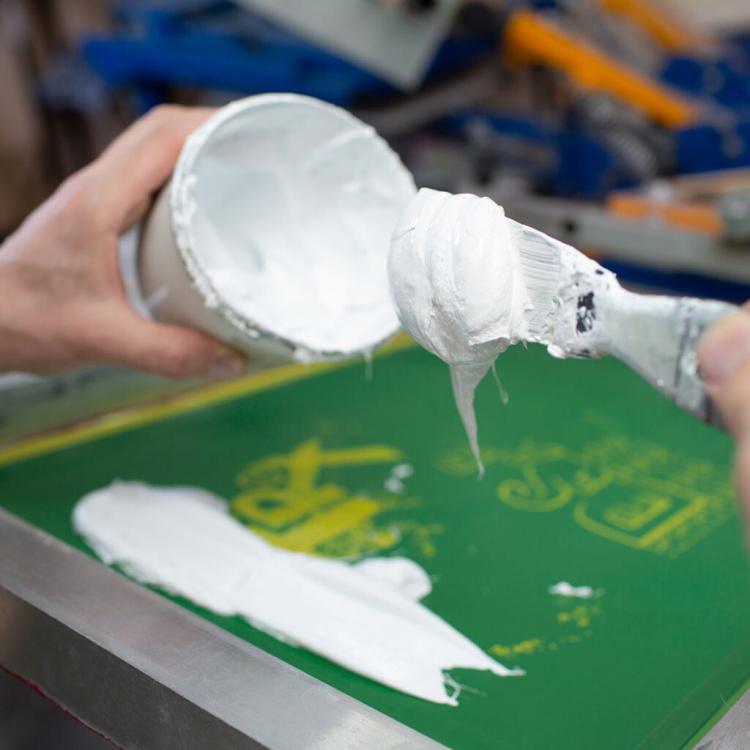
It gives high opacity on dark fabric. It handles long print runs. It supports special effects like puff, stretch, metallic, glow, and high-density prints. It also gives stable color when the factory needs repeat orders.
For example, a T-shirt printer may need a bright white logo on black cotton. A sportswear factory may need stretch and wash resistance. A sock or glove factory may need ink that holds detail on elastic fabric. In these cases, plastisol ink often gives the printer better control.
That is why many B2B buyers still source phthalate-free plastisol ink instead of moving every project to water-based ink. The point is not “plastisol or nothing.” The point is choosing the right ink for the job and proving that it fits the market.
The EU buyer checklist
Use this checklist before you approve samples or pay for bulk production.
| check item | what to ask for | why it matters |
|---|---|---|
| SDS | current safety data sheet | shows product identity, hazard details, handling, and regulation information |
| REACH declaration | clear supplier statement | helps your buyer file and compliance review |
| SVHC status | Candidate List review | relates to Article 33 communication duties |
| phthalate report | DEHP, DBP, BBP, DIBP testing | key risk area for plasticised materials |
| batch traceability | batch number, color, production date | prevents document mismatch |
| finished print test | printed fabric or garment result | tests the real product that goes to market |
| curing guide | temperature and dwell time | protects wash resistance and print durability |
This table looks simple. In real orders, it saves time.
A supplier may say, “Our ink is safe.” That sounds nice. It is not enough. Ask them to show the paperwork that matches the exact ink, exact color, and exact batch.
What documents should a supplier provide?
For EU-focused orders, we normally prepare or support these items:
safety data sheet
The SDS should match the product. If you buy white ink, the SDS should not refer to a general ink family with unclear details. Check the revision date too. Old documents create questions during buyer review.
REACH declaration
The declaration should mention REACH clearly. It should also connect to SVHC and restricted substance checks where relevant.
phthalate test report
For plastisol ink, this is one of the first reports I would ask for. DEHP, DBP, BBP, and DIBP deserve special attention because they are named in EU phthalate restrictions.
technical data sheet
This should explain mesh, curing temperature, curing time, fabric suggestions, opacity, hand feel, and storage. A good TDS helps your printer avoid trial-and-error waste.
batch record
Batch control matters for repeat business. If you print 5,000 pieces this month and 20,000 pieces next month, you want the same print behavior. That is why B2B buyers often prefer a direct screen printing ink supplier with stable production instead of a trading source with unclear control.
Why the finished print matters more than the ink bucket
This is where many buyers make a mistake.
They test the ink in the bucket and then assume the garment will pass. Sometimes it does. Sometimes it doesn’t.
The printed garment can pick up risk from tools, additives, transfer films, pigments, old containers, or the wrong curing process. If the printer uses an old spatula that touched non-compliant material, your clean ink may not stay clean. It sounds basic because it is. Basic things cause expensive problems.
For EU orders, we suggest testing the printed fabric or final garment when the risk is high. This is especially true for children’s clothing, skin-contact textiles, retail programs, and large distributor orders.
If you need fast production, choose the right ink system first. A stable t-shirt printing ink or sportswear printing ink can improve speed. Still, speed should never replace proper curing and document control.
What the market data tells us
Chemical risk in textiles is not just a theory.
The European Environment Agency reported that in 2025, there were 72 chemical-related alerts for clothing, textile, and fashion items in the EU Safety Gate system. The same source says the 2020-2025 average was 59 alerts per year. It also says 72% of 2025 risks related to human health.
| data point | what it means for buyers |
|---|---|
| 72 chemical alerts in 2025 | textile chemical checks remain active in the EU |
| 59 alerts per year average from 2020-2025 | this is not a one-year issue |
| 72% related to human health in 2025 | buyer risk is not only paperwork |
| REACH4Textiles found 16% non-compliance | testing can reveal hidden problems |
The European Commission has also taken action against hazardous chemicals in clothing, textiles, and footwear.
So if you sell into the EU, treat compliance like part of the product. Don’t treat it like a file you chase after production.
How we handle it at HONG RUI SHENG
We start with the end market. If the product goes to EU apparel buyers, we look at the formula, the print use, and the buyer’s required documents before we recommend the ink.
For dark garments, buyers often ask for strong coverage. In that case, we may guide them toward high opacity plastisol ink. For heat-sensitive fabrics, we look at low cure plastisol ink. For bulk programs, we focus on repeat color, stable viscosity, curing control, and batch consistency.
Here is the practical workflow we like:
| step | what we do | buyer benefit |
|---|---|---|
| 1 | confirm fabric and print method | reduces wrong ink selection |
| 2 | choose ink series and color | matches opacity, stretch, and hand feel |
| 3 | review compliance needs | avoids late document problems |
| 4 | test sample print | checks curing and wash result |
| 5 | lock batch and formula | supports repeat production |
| 6 | prepare documents | helps buyer approval move faster |
This is not fancy. It is just careful work. In B2B ink supply, careful work wins.
Where OEKO-TEX fits in
OEKO-TEX STANDARD 100 is useful for textile buyers because it focuses on harmful substance testing for textile products and accessories. The official standard document explains that it applies to textile products and accessory materials at different production stages.
However, OEKO-TEX is not a magic replacement for REACH. Use it as another layer of buyer confidence. For EU orders, you still need to check REACH, SVHC, phthalates, and the finished article risk.
A simple buyer example
Let’s say you buy plastisol ink for 15,000 black cotton T-shirts. The design uses a white base, a red logo, and a small sleeve print.
Supplier A says, “No problem. Eco ink.” But they cannot send a current SDS. They also send a phthalate report that does not match the ink series.
Supplier B sends the SDS, REACH declaration, phthalate report, curing guide, and batch number. They also tell you to test the final print after curing.
I know which supplier I’d trust.
The second supplier may not look cheaper on day one. But if the first supplier causes a failed test, a delayed shipment, or a buyer complaint, that “cheap” ink becomes very expensive.
Best practices before you buy
First, ask for documents before you negotiate hard on price. A serious supplier should handle basic compliance questions without panic.
Second, test the printed garment when the order matters. The ink bucket is not the final product.
Third, keep batch records. If you reorder after three months, the old report should still connect to the new supply record or you should ask for updated support.
Fourth, don’t mix unknown old ink with EU-compliance production. Separate tools and containers. It is a small habit with a big payoff.
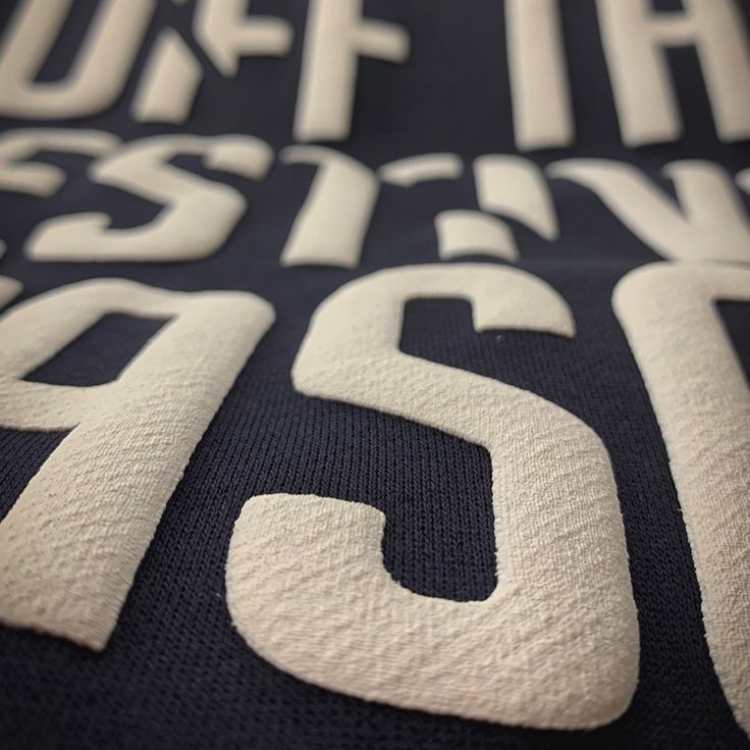
Finally, work with a manufacturer that understands bulk printing. HONG RUI SHENG supports industrial buyers, OEM projects, private label supply, and custom formulations. If you need special effects, you can also explore options like puff plastisol ink for raised prints or special decoration programs.
Final checklist for EU buyers
| question | good answer |
|---|---|
| does the supplier know the EU market? | yes, they understand REACH and buyer documents |
| can they provide SDS? | yes, for the exact product |
| can they support phthalate checks? | yes, especially DEHP, DBP, BBP, DIBP |
| can they help with finished print testing? | yes, when buyer risk is high |
| do they control batches? | yes, with traceable records |
| can they support repeat orders? | yes, with stable formula and color |
If you can tick these boxes, your order has a much better start.
FAQ
Q1. Is plastisol ink allowed in the EU?
Yes, plastisol ink can be used for EU textile printing when the formula and final printed article meet relevant chemical restrictions. Buyers should check REACH, SVHC, phthalates, and supporting documents.
Q2. Does phthalate-free plastisol ink mean REACH compliant?
Not always. Phthalate-free is important, but you still need SDS, REACH declaration, SVHC review, and test support for the final printed article.
Q3. Should I test the ink or the finished garment?
For low-risk internal sampling, ink testing may help. For EU buyer approval, test the finished printed fabric or garment whenever the order is important.
Q4. What should I ask HONG RUI SHENG before bulk order?
Ask for the SDS, REACH declaration, phthalate report, technical data sheet, curing guide, batch details, and sample testing advice for your selected Plastisol Ink.
Q5. What is the biggest risk when buying cheap plastisol ink?
The biggest risk is unclear formulation and weak documentation. If the ink fails a buyer review after production, the cost can be much higher than the small saving on ink.