
If you’re running a high-volume print shop, you don’t have time for downtime. Here is the bottom line: For reliable, high-speed mass production, screen printing plastisol ink is the undisputed king.
While water-based inks are trendy for that “soft feel,” they are notoriously difficult to manage on an automatic press. At HONG RUI SHENG, we’ve seen that switching to a high-quality plastisol workflow increases press uptime by roughly 15-20% because the ink doesn’t dry in the screens. You get consistent opacity, faster curing, and a significantly lower rejection rate.
Table of Contents
Why We Bet on Plastisol for Big Orders
When we talk to factory owners, the conversation always goes back to the “Cost of Complexity.” Water-based inks require constant monitoring of humidity and screen additives. Plastisol ink, on the other hand, is a “set it and forget it” solution.
The Efficiency Gap
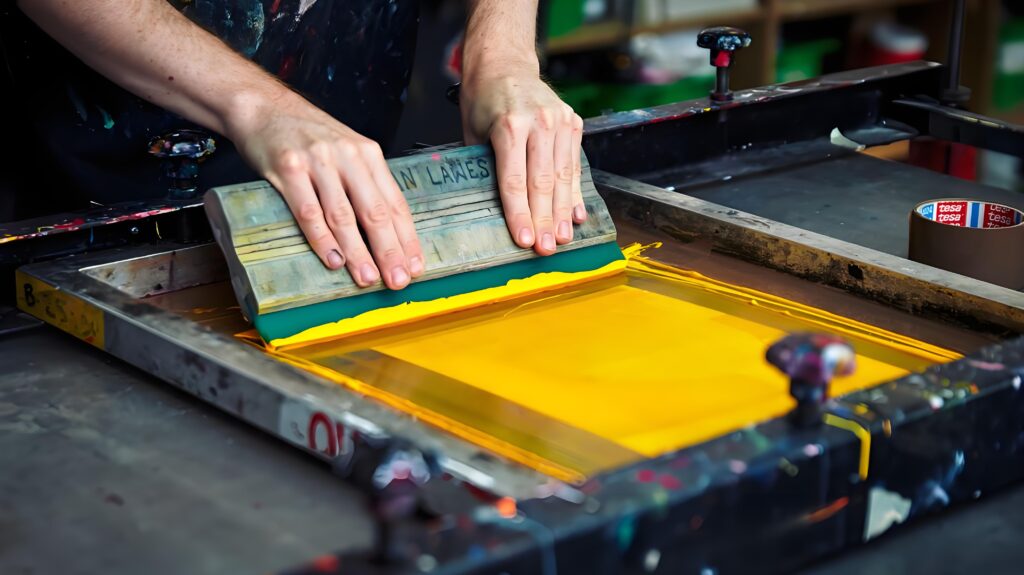
In a mass-production environment, every second counts. Plastisol inks only cure when exposed to high heat (around 320°F – 330°F).
- Plastisol Flash Time: 5–8 seconds.
- Water-Based Flash Time: 10–15 seconds (plus the risk of scorching).
Expert Insight: According to data from Thrive Screen Printing, plastisol’s ability to stay “open” in the screen without clogging saves hours of labor in a standard 8-hour shift.
Side-by-Side: The Production Reality
| Feature | Plastisol Ink (Our Specialty) | Water-Based Ink |
| Ease of Use | Extremely High (Doesn’t dry in screen) | Moderate (Dries quickly, clogs mesh) |
| Opacity | Excellent on dark fabrics | Requires multiple passes/underbase |
| Curing Speed | Fast (5-8 seconds flash) | Slow (Requires water evaporation) |
| Shelf Life | Practically indefinite | Limited once opened/mixed |
| Best For | Heavy cotton, hoodies, jerseys | Thin retail tees, organic lines |
If you are looking to scale, you need to check out our screen printing plastisol ink series to see how we’ve optimized viscosity for high-speed automatic presses.
How to Start: Choosing the Right Ink for Your Fabric
We always tell our clients: The fabric dictates the chemistry. If you are printing on 100% cotton, you have a choice. But if you’re moving into 50/50 blends or 100% polyester—which is common in mass-produced promotional gear—plastisol is almost mandatory. Polyester fibers tend to “bleed” their dye into the ink (dye migration). Our specialized low bleed plastisol ink acts as a barrier, ensuring your whites stay white and your reds don’t turn pink.
Best Practice: The “Donut” Test
Before starting a 5,000-piece run, we recommend using a “Donut” probe or heat strips. Don’t trust the dryer’s digital display. You must ensure the entire ink film—not just the surface—reaches the cure temperature. This prevents the #1 cause of mass-production failure: ink cracking after the first wash.
The “Soft Hand” Myth: Can Plastisol Compete?
A common argument is that water-based ink feels better. While true for “raw” ink, modern soft hand additives for plastisol allow us to thin the ink down. By using a higher mesh count (230-305) and our thinners, we can achieve a print that feels nearly as soft as water-based but with the durability of plastic.
Data Insight: A case study by Tee Prints highlighted that while water-based inks are perceived as “premium,” they can lead to a 10% increase in production costs due to ink waste and energy consumption in the dryer.
Solving Common Mass Production Issues
Problem: Ink Build-up on the Back of Screens
In high-speed “wet-on-wet” printing, ink can build up.
The Solution: Increase your squeegee speed and use a slightly harder squeegee (70/90/70 triple durometer). This shears the ink cleanly and keeps the production line moving. You can find these specialized tools in our screen printing accessories section.
Problem: Scorched Garments
When trying to speed up water-based lines, operators often crank the heat, leading to scorched shirts.
The Solution: Stick with plastisol. Because it cures faster, you can run your conveyor belt at a higher speed without needing dangerous temperature spikes.
Our Experience: Why HONG RUI SHENG?
We don’t just sell ink; we solve bottlenecks. We’ve spent years refining our textile screen printing solutions to ensure that when you load a gallon of our ink into your machine, it performs exactly like the last one. Consistency is the secret sauce of mass production.
Practical Tips for High Volume:
- Pre-heat your pallets: Your first 10 shirts will cure differently than shirt number 500 if your pallets are cold.
- Monitor Viscosity: In cold warehouses, plastisol thickens. Give it a good stir with a drill mixer before putting it on the press.
- Standardize your Mesh: Stick to 110 mesh for underbases and 160-200 for top colors to keep your screen printing supplies organized and predictable.
Pro Pitfall Guide: 5 Burning Questions for Mass Production
Q1: If we’re talking bottom-line ROI, which ink actually saves me money?
Let’s be blunt: it’s screen printing plastisol ink every single time. While the sticker price per gallon for water-based ink might look similar, the “hidden costs” in mass production will kill your margins. Water-based ink dries in the mesh constantly. If you have to stop an automatic press for 30 minutes just to scrub screens, that lost labor and downtime cost more than several buckets of premium ink. Based on our factory floor tests here at HONG RUI SHENG, switching to plastisol can boost overall production efficiency by over 15%.
Q2: My clients keep demanding a “soft hand” feel—can plastisol pull that off?
This is a classic industry myth. Most people think plastisol prints like a thick plastic slab because they aren’t using the right technique. We recommend adding a small amount of plastisol thinning additive and bumping up to a high mesh count (230 or higher). This creates an incredibly thin ink film that rivals the feel of water-based ink while keeping the massive advantage of not clogging your screens.
Q3: Why do my water-based prints look dull compared to plastisol?
Water-based inks soak into the fibers, which mutes the color. Plastisol sits on top of the fibers. For mass-market “pop” and bright colors on dark shirts, plastisol wins every time. It gives you that crisp, “retail-ready” look that customers expect.
Q4: Environmental standards are getting strict—is plastisol still okay for export?
That’s old-school thinking. Today’s eco-friendly screen printing supplies
have long been phthalate-free and lead-free. Every batch of ink leaving the HONG RUI SHENG facility complies with major international safety regulations. As long as you’re sourcing from a compliant supplier, your garments are retail-ready for any global supermarket or high-end boutique.
Q5: How do I stop polyester fabrics from changing color?
“Dye migration” is the nightmare of mass production. If you use water-based ink on dark polyester, the fabric dye will bleed right through the print. For these jobs, you absolutely need to use our low bleed white plastisol as an underbase. It acts like a physical wall, blocking the fabric dye from rising. It is the most reliable “fail-safe” for international export orders today.