
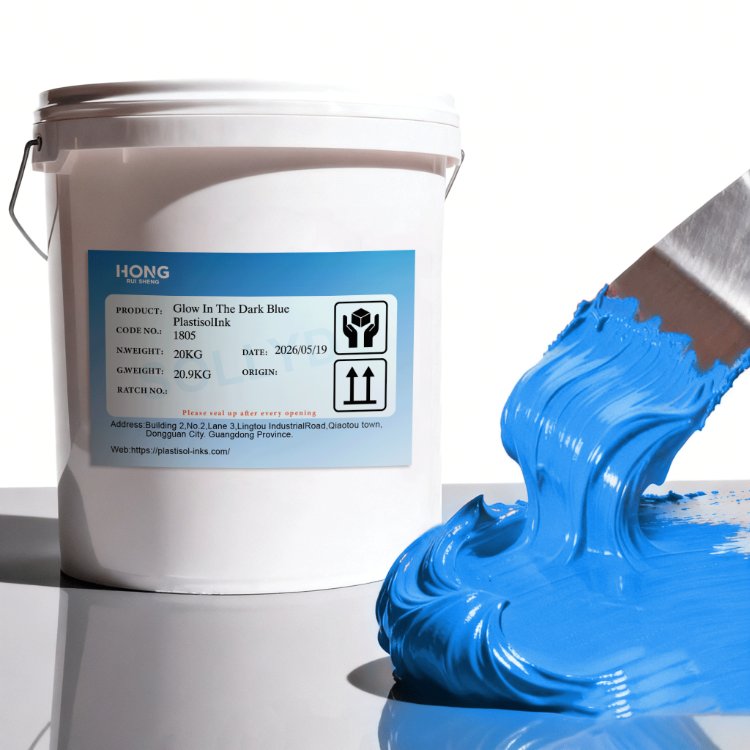

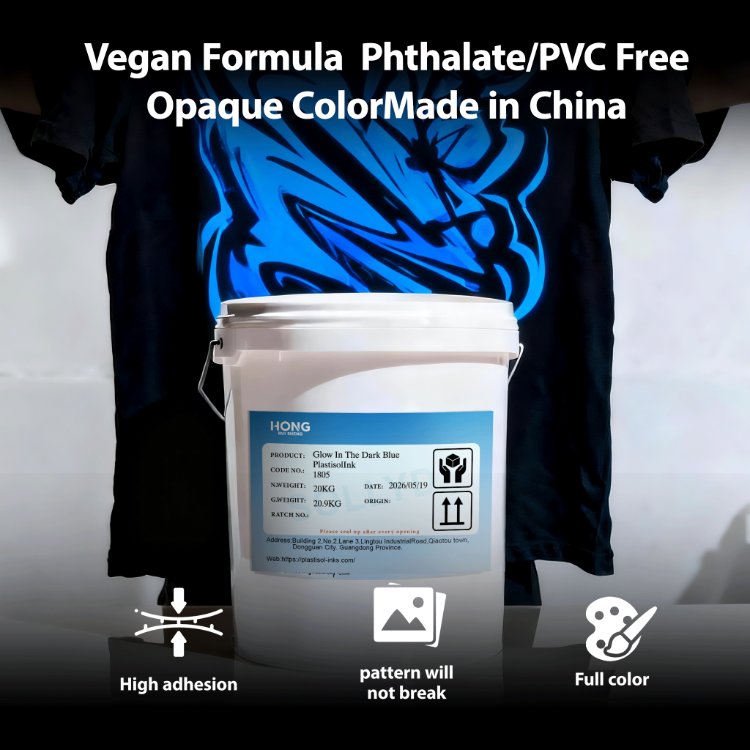


I have spent twenty years smelling plastisol in the morning and I can tell you there is nothing quite like the sight of a fresh batch of shimmering blue ink. Most people see just a bucket of blue goop but I see the secret weapon for every high-end print shop from New York to Ho Chi Minh City. If you are running a B2B operation or managing a massive production line you know the struggle of finding that one specialty finish that actually moves the needle for your clients.
Como líder Fabricante de tinta Plastisol we see the trends before they even hit the street. Right now the world is obsessed with texture. Flat colors are fine for your basic promotional giveaway yet high-fashion brands and professional sports teams want something that catches the light and refuses to fade. That is where HONG RUI SHENG INK comes into play. In this guide I am going to walk you through the technical “why” and the commercial “how” of mastering shimmering blue plastisol inks in 2026.
1. The Science of the Shimmer: It’s Not Just Glitter
Let’s get one thing straight: shimmering blue is not just blue ink with some hobby-store glitter tossed inside. It is a precision-engineered dispersion of aluminum flakes and pearlescent pigments.
In our Screen Printing Ink Factory we use a complex PVC-based carrier that holds these flakes in suspension. If the chemistry is off the flakes sink to the bottom of the bucket or they get trapped in your mesh. We have spent years perfecting the thixotropic properties of our formula so it flows like silk under the squeegee but stands up tall on the fabric.
Why the 2026 Market Demands This
The digital textile market is currently on fire and it is projected to hit USD 6.6 billion this year. While digital printing is great for detail it absolutely sucks at opacity and texture. You cannot get a “liquid metal” look from an inkjet head. This is why traditional screen printing remains the king of specialty apparel. When you source from a reliable Plastisol Ink Supplier you are giving your customers something a digital printer simply cannot replicate.

2. Technical Specs: How to Print It Without Losing Your Mind
I have seen seasoned printers throw their squeegees across the room because their metallic ink was clogging or peeling. Nine times out of ten it is because they treated it like standard White Plastisol Ink. Shimmering inks are different animals.
The Mesh Count Secret
If you try to push shimmering blue through a 230-mesh screen you are going to have a bad day. The aluminum flakes are physically too large to pass through those tiny holes. You need a “wide door.”
Optimal Mesh: 86 to 110.
Raspador: Use a medium-hard 70 durometer blade.
Presión: Firm but not excessive. You want the ink to sit on the surface of the fabric for maximum light reflection.
The Curing Threshold
Plastisol does not “dry” like water-based ink; it fuses. You have to hit that magic temperature of 150°C to 160°C to turn that liquid into a solid thermoplastic film. If you under-cure it the print will wash off in a week. If you over-cure it you might scorch the shirt. I always tell my clients to use a Tinta plastisol de baixo curado to save on electricity and protect sensitive synthetic fabrics.
3. Comparing the Performance: 2026 Standards
Here is a quick breakdown of how our different series handle the heavy lifting in a professional shop environment.
Table 1: Specialty Ink Performance Matrix
| Característica | Tinta plastisol de alta opacidade | Tinta de serigrafía dourada metálica | Tinta plastisol negra |
| Visual Effect | Shimmer/Reflective | Mirror Shine | Matte/Flat |
| Opacidade | 98% (Excellent) | 95% | 100% |
| Solidez ao lavado | 50+ Cycles | 40+ Cycles | 50+ Cycles |
| Estirabilidade | Alto | Moderado | Alto |
| Best Used For | Dark Apparel/Fashion | Awards/Luxury Merch | Underbases/Text |
4. Why B2B Buyers are Switching to HONG RUI SHENG
Look, I know you have options when it comes to Wholesale Plastisol Ink. But in the international trade world reliability is the only currency that matters. If your Screen Printing Ink Supplier disappears when a batch goes bad your business is in trouble.
100% Sen ftalatos
The 2026 regulatory landscape is brutal. If your inks contain old-school plasticizers you are going to get flagged by customs or rejected by big-box retailers. Every drop of our Tinta plastisol sen ftalatos is designed to meet REACH and OEKO-TEX standards. We even offer a PVC-Free Plastisol Ink for those high-end clients who demand total sustainability.
Superior Opacity
Most blue inks struggle on black shirts. You usually have to print a white underbase first but that makes the shirt feel like a heavy piece of armor. Our Tinta Plastisol is loaded with enough pigment that you can often skip the underbase and go straight to the shimmering finish. It saves you time so it saves you money.
5. The ROI of the “Wow” Factor
Let’s talk about the money. Most shop owners worry about the cost per gallon of Plastisol Ink Wholesale but they should be looking at the profit per shirt.
If a standard blue shirt sells for $10 a shimmering blue shirt can easily sell for $15 or $18. Your ink cost only goes up by a few cents per garment yet your profit margin nearly doubles. Whether you are doing T-shirt Printing Ink for a local band or Sportswear Printing Ink for a pro team the specialty finish is your biggest money-maker.
Table 2: The Profit Gap
| Compoñente | Standard Royal Blue | Shimmering Blue |
| Ink Cost (Per Shirt) | $0.15 | $0.22 |
| Labor/Setup | $1.20 | $1.25 |
| Wholesale Price | $8.00 | $12.00 |
| Gross Profit | $6.65 | $10.53 |
6. Pro Tips for Troubleshooting
I’ve been in this game long enough to know that things go wrong. Here is how you fix the most common shimmering blue headaches.
Ink Cracking: This usually means you aren’t hitting your cure temp. Use a Stretch Plastisol Ink additive if you are printing on stretchy polyester.
Rough Texture: If the shimmer feels like sandpaper you are using too much pressure. Lighten up the squeegee stroke so the flakes stay on top.
Color Bleeding: On polyester blends the fabric dye can “gas out” and turn your blue into a muddy mess. Use an Anti Migration Printing Ink as a barrier to keep that blue popping.
Poor Flow: If the ink is too thick in the bucket don’t just dump in water. Use a dedicated reducer to keep the Screen Printing Ink chemistry balanced.
7. The Future: Special Effects are the New Standard
We are already testing the next generation of inks at our factory. From Glow in the Dark Plastisol Ink to Puff Plastisol Ink that expands when heated the industry is moving away from “flat” and toward “functional.”
Even Heat Transfer Printing Ink is getting a shimmering makeover. Buyers in 2026 want clothes that tell a story and a shimmering blue print tells a story of quality and premium design.

FAQ: Your Quick Cheat Sheet
Q1. Can I mix shimmering blue with Plastisol CMYK Ink?
You can but I don’t recommend it. It will dilute the flakes and make the shimmer look dull. Keep it as a dedicated spot color for the best results.
Q2. How long does the shimmer last?
If cured properly it will outlast the shirt itself. We have seen our Screen Printing Plastisol Ink maintain its shine for over 50 industrial wash cycles.
Q3. Is it safe for kids’ clothing?
Yes. Our Phthalate-Free Plastisol Ink is specifically designed to meet global safety standards for children’s wear.
Q4. Why is my mesh clogging?
Check your mesh count. Anything higher than 110 will act like a filter and trap the shimmering flakes. Drop down to an 86 mesh and watch the magic happen.
Q5. How do I get a sample?
Contact us directly through our Wholesale Screen Printing Ink portal. We love helping shops level up their game.
Final Thoughts: Don’t Just Print, Dominate.
The screen printing world is competitive and if you aren’t offering something special you are just competing on price. That is a race to the bottom. By incorporating shimmering blue from a world-class Plastisol Ink Manufacturer you are moving into the premium tier.
I’ve seen shops transform from small local outfits to international powerhouses just by mastering specialty finishes like these. Take the leap. Grab a bucket of the shimmering blue and show your clients what they’ve been missing.
Stay sparkling.
 English
 Arabic
 Belarusian
 Bengali
 German
 Finnish
 French
 Italian
 Japanese
 Turkish
 Polish
 Danish
 Hungarian
 Croatian
 Hebrew
 Russian
 Greek
Greek Vietnamese
 Ukrainian
 Spanish
 Galician
 Marathi
 Thai
Thai Swedish
 Tamil
Tamil Afrikaans
 South Azerbaijani
 Welsh
Welsh Persian
 Indonesian