


At HONG RUI SHENG, we’ve seen it a thousand times: you finish a massive run of red or camo hoodies, the white looks killer, and then you come back the next morning only to find every single print has turned a muddy pink or a sickly yellow. It’s the ultimate production nightmare.
The “secret sauce” to stopping this isn’t just buying expensive ink; it’s mastering the time-over-temperature balance. By switching to a low-cure plastisol ink that fuses at 270°F(132℃), you stay safely below the “gas-off” point of polyester dyes. This keeps your whites bright and your customers coming back.
Table of Contents
1. Why Your White Ink is Lying to You
If your ink looks white on the belt but yellow in the box, you’re dealing with Dye Migration. This isn’t a stain; it’s a chemical reaction.
- The Science: Most polyester dyes turn into gas once the fabric hits 285°F(140℃). That gas travels up through the ink layer and “tints” it from the inside out.
- The Scorching Myth: If the yellowing is immediate and the fabric feels brittle, that’s scorched fibers. This happens when your dryer is running too hot to compensate for a short belt.
2. Practical “In-the-Shop” Fixes for Big Runs
When you’re pushing 500+ shirts, small errors compound. Here is how we handle it at our facility.
Dialing in the Dryer (Dwell Time is King)
Don’t just crank the heat to 350 and hope for the best.
Our Best Practice: We prefer a “low and slow” approach. Set the dryer to 280°F but slow down the belt so the shirt stays in the heat for at least 60–90 seconds. This ensures the entire “puck” of ink reaches cure temperature without triggering the poly-gas.
The Stacking Trap
In large batches, heat is your enemy. If you stack 50 hot shirts directly off the dryer, the center of that pile stays at 200°F for twenty minutes. That’s plenty of time for dyes to migrate.
- The Fix: Use a cooling fan at the end of the belt or “stagger-stack” the garments to let them breathe.
Mesh & Squeegee Specs
For high-volume white plastisol ink, we recommend:
- Mesh: 110 for the underbase (thick barrier) and 156 for the top coat.
- Squeegee: 70 durometer. You want a sharp edge to lay the ink on the fabric, not drive it into the fibers where the dye lives.
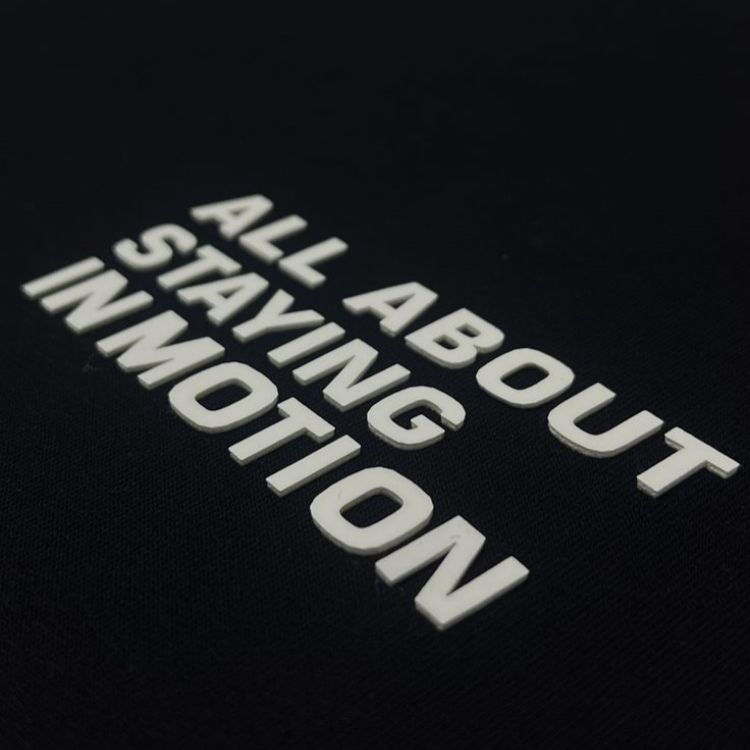
- HONG RUI SHENG’s solution:
3. Troubleshooting Guide: Quick Fixes
| Symptom | What’s actually happening | The Fix |
| Pinkish White | Red poly dye migrated | Lower temp; use low-bleed white ink. |
| Yellow/Brown Fabric | Scorched fibers | Raise the heating elements; speed up the belt. |
| Ink Peeling | Under-cured | Check the “ink film” temp with a donut probe. |
4. The 24-Hour “Insurance” Test
Before starting a full production run, we always run one test shirt.
- Print & Cure as normal.
- The “Oven” Test: Put the shirt in a warm spot (or a box) for 24 hours. If it stays white, you’re good to go.
Note: Don’t over-use ink additives. Adding too much reducer kills the opacity and makes it easier for dyes to bleed through.
5. Pro FAQ: Questions We Get Daily
Q1: Can I use a flash unit for the final cure?
Honestly? We don’t recommend it for big batches. It’s too inconsistent. You’ll end up with some cured shirts and some that wash off.
Q2: What about 50/50 blends?
Blends are easier, but they still ghost. Always use a low-cure ink to play it safe.
Q3: Is my temp gun accurate?
Laser guns only read the surface. For thick plastisol ink, the bottom of the ink layer needs to hit the cure temp. A donut probe is the only way to be 100% sure.
Q4: Does the ink brand matter?
Quality matters. Cheap whites often have less Titanium Dioxide (the white pigment), meaning you have to print thicker to get coverage, which leads to more heat issues.
Q5: How do I stop fibrillation (fuzzy shirts)?
Make sure your flash-cure is dry to the touch before the second hit of white. This “mats down” the fibers.
The Solution: Why Precision Matters for Your Bottom Line
At HONG RUI SHENG, we don’t just see ourselves as an ink supplier—we are your partners in production. We understand that in high-volume B2B manufacturing, a 5% rejection rate isn’t just a “minor hiccup”; it’s thousands of dollars in lost fabric, wasted labor, and damaged client trust.
Mastering white plastisol ink and defeating the “yellow ghost” of dye migration comes down to one thing: Technical Control. By implementing the low-cure temperatures, calibrated dwell times, and the specialized low-bleed white ink we’ve discussed, you aren’t just printing—you are engineering a premium product that stands the test of time.
Let’s Dial In Your Production Together
Every shop floor is different, and every fabric blend has its own “personality.” If you’re still battling yellowing or ink cracking in your large-scale runs, don’t leave your next batch to chance.
Our experts are ready to help you:
- Audit your current cure profile to eliminate scorching.
- Recommend the exact mesh/ink combination for your specific substrate.
- Provide custom TDS (Technical Data Sheets) for your production team.
Stop the guesswork. Leave your contact details below, and one of our solution specialists will reach out to provide a free technical consultation and a sample kit of our high-opacity, low-cure whites.