
Daftar isi
Jawaban singkatnya sederhana: Tinta Anda mungkin hanya perlu diaduk. Sebagian besar plastisol bersifat thixotropic, artinya tinta akan mengental saat diam tetapi menjadi lembut saat digerakkan. Kami sarankan Anda mengaduk tinta setidaknya selama 60 detik sebelum menambahkan bahan kimia apa pun. Jika tinta masih seperti batu bata setelah diaduk, Anda harus menambahkan pengencer pengeringan 1-3% berdasarkan berat. Ini akan menjaga warna tetap cerah dan membuat hasil cetakan terasa seperti awan di kaos.
Mengapa Hal Ini Terjadi pada Tinta Kita?
Kita semua pernah mengalaminya. Anda membuka ember tinta plastisol putih yang baru dan isinya terlihat seperti selai kacang dingin. Anda mungkin berpikir tinta tersebut sudah rusak, tetapi biasanya itu hanya trik sains. HONG RUI SHENG Kita tahu bahwa tinta berperilaku berbeda tergantung pada ruangan.
Semuanya Tentang Tixotropi
Plastisol adalah campuran PVC dan plasticizer, dan ia cenderung "diam". Saat disimpan di rak selama berminggu-minggu, molekul-molekulnya akan saling berikatan membentuk "struktur semu". Meskipun terasa kaku, sebenarnya belum kering.
- Perubahan Fisik: Pengadukan menghasilkan gaya geser.
- Hasilnya: Ikatan putus dan tinta mengalir kembali.
Amukan Suhu
Jika toko Anda dingin, tinta Anda akan mengental. Kami melihat ini setiap musim dingin. Ketika suhu turun di bawah $65, plasticizer berhenti bergerak dengan baik dan tinta Anda tinta cetak kaos menjadi mimpi buruk untuk menembus jaring tersebut.
Bagaimana Kami Memulai Perbaikan
Jangan langsung menggunakan bahan kimia! Kami mengikuti proses yang ketat di fasilitas kami untuk memastikan kami tidak merusak tinta HONG RUI SHENG sebelum pekerjaan dimulai.
1. Pengadukan Kekuatan
Gunakan spatula yang kokoh atau pengaduk bor. Kami lebih menyukai bor untuk ember besar berukuran 5 galon. Aduk dengan kuat selama dua menit. Anda akan melihat tinta berubah dari balok padat menjadi cairan mengkilap. Langkah sederhana ini dapat menurunkan viskositas hingga 30% tanpa mengeluarkan biaya sepeser pun untuk aditif.
2. Pemeriksaan Suhu
Kami menjaga suhu lantai produksi kami tetap stabil di 72°F. Jika tinta Anda dingin, Anda dapat meletakkan ember di dekat pengering selama beberapa menit. Hanya saja jangan sampai terlalu panas, atau seluruh ember akan berubah menjadi cakram karet raksasa!
3. Menambahkan Hal yang Tepat
Jika pengadukan tidak berhasil, Anda membutuhkan... tinta plastisol bebas ftalat pereduksi. Kami menyebutnya "pereduksi yang dapat disembuhkan."“
Tips dari Pakar: Jangan pernah menggunakan tiner atau air. Air akan membuat tinta luntur dari kaos saat dicuci, dan tiner akan berbau seperti pom bensin.
Tabel Referensi Viskositas
| Negara Tinta | Merasa | Tindakan Diperlukan |
| Dingin & Statis | Seperti tanah liat | Aduk selama 2 menit |
| Siap Dicetak | Seperti madu | Mulai proses pencetakan! |
| Terlalu Tebal | Spatula tidak akan jatuh | Tambahkan reduktor 2% |
Praktik Terbaik untuk Dunia Nyata
Kami ingin toko Anda beroperasi dengan cepat dan pelanggan Anda merasa senang. Berikut cara kami mewujudkannya.
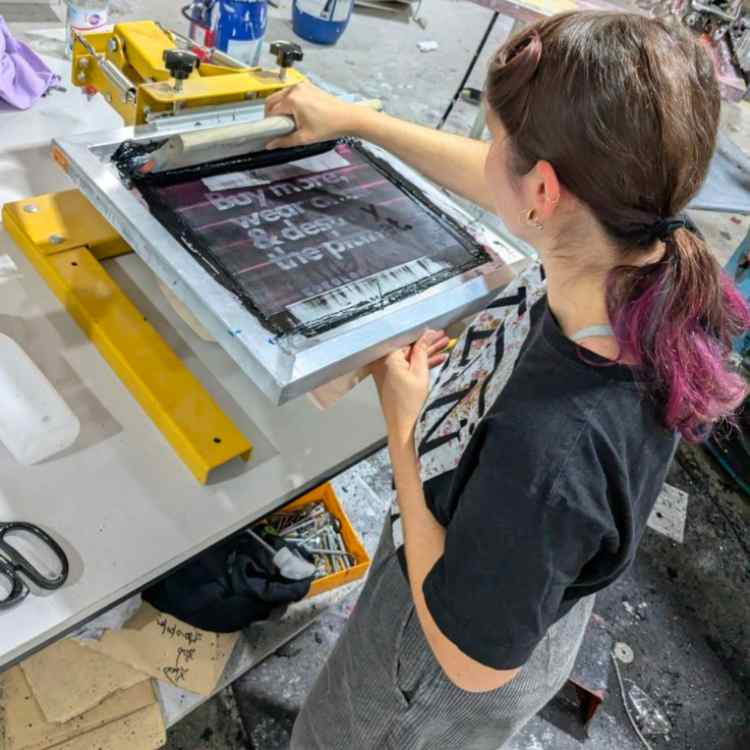
- Latihan 1: Gunakan Aturan 3%. Mulailah dari sedikit. Anda selalu bisa menambahkan pengencer, tetapi Anda tidak pernah bisa menguranginya. Jika Anda menambahkan terlalu banyak, tinta plastisol dengan opasitas tinggi akan menjadi transparan dan hasil cetakan Anda akan terlihat pucat.
- Latihan 2: Periksa Jaringan Anda. Jika Anda menggunakan mesh yang sangat halus seperti 230 atau 305, Anda membutuhkan tinta yang lebih encer. Tinta yang kental akan menyumbat lubang dan Anda akan kesulitan membersihkan layar sepanjang hari.
- Praktik 3: Simpan dengan Benar. Tutup rapat wadahnya! Jika udara masuk, zat pelunak plastik dapat berpindah dan tinta plastisol Anda akan menjadi "kering" seiring waktu.
Sebuah Berita dari Pers
Bulan lalu, seorang klien besar menghubungi kami. Mereka mencoba mencetak pekerjaan 5 warna pada hoodie hitam. Tinta anti migrasi mereka sangat kental sehingga menarik hoodie dari pelat cetak. Mereka frustrasi dan ingin berhenti untuk hari itu.
Kami menyuruh mereka berhenti dan bernapas. Kami menyuruh mereka mengaduk tinta dengan bor selama tiga menit, lalu menambahkan sedikit pengencer. Tiba-tiba tinta mengalir lancar di layar dengan setengah tekanan. Kecepatan produksi mereka berlipat ganda dan hoodie yang dihasilkan memiliki hasil akhir yang lembut dan terasa mewah. Itulah kekuatan manajemen viskositas yang tepat!
Mengapa Anda Harus Peduli
Jika tinta Anda terlalu kental, Anda harus menekan lebih keras. Menekan lebih keras akan membuat pergelangan tangan Anda sakit dan mempercepat keausan alat perata tinta. Hal ini juga menyebabkan "fibrilasi" di mana serat-serat baju menembus tinta. Ketika tinta Anda memiliki konsistensi "madu" yang sempurna, tinta akan berada di atas kain dan terlihat rapi.
Tanya Jawab Umum
Pertanyaan 1: Bisakah saya menggunakan air untuk mengencerkan tinta plastisol saya?
Tidak! Plastisol terbuat dari minyak dan plastik. Air dan minyak tidak bercampur, jadi Anda akan merusak tinta dan sablon Anda.
Pertanyaan 2: Seberapa banyak pengencer yang terlalu banyak?
Kami menyarankan Anda untuk tetap menggunakan standar di bawah 10%. Jika Anda menggunakan standar yang lebih tinggi, tinta mungkin tidak mengering dengan sempurna dan akan terasa berminyak di kaos.
Q3: Apakah mengencerkan tinta akan membuatnya kurang cerah?
Ya, bisa. Pengencer warna bening sehingga menyebarkan pigmen. Jika Anda mengencerkannya terlalu banyak, warna putih Anda akan terlihat abu-abu pada kaos hitam.
Pertanyaan 4: Mengapa tinta saya mengental lagi saat mencetak?
Kemungkinan besar itu disebabkan oleh panas dari unit flash Anda. Jika screen terlalu panas, tinta akan mulai "mengental" di dalam mesh. Anda perlu mendinginkan platen Anda!
Q5: Apa alat terbaik untuk mencampur?
Untuk pekerjaan kecil, spatula logam sangat bagus. Untuk produksi besar, kami selalu menggunakan bor listrik dengan pengaduk tinta khusus.
Ringkasan untuk Para Profesional
Mengelola tinta Anda sama pentingnya dengan memilih tinta yang tepat. produsen tinta plastisol. Jangan takut untuk mengotori tangan Anda dan mengaduk ember itu! Lengan Anda dan pelanggan Anda akan berterima kasih nanti.
 English
 Arabic
 Belarusian
 Bengali
 German
 Finnish
 French
 Italian
 Japanese
 Turkish
 Polish
 Danish
 Hungarian
 Croatian
 Hebrew
 Russian
 Greek
Greek Vietnamese
 Ukrainian
 Spanish
 Galician
 Marathi
 Thai
Thai Swedish
 Tamil
Tamil Afrikaans
 South Azerbaijani
 Welsh
Welsh Persian
 Indonesian