
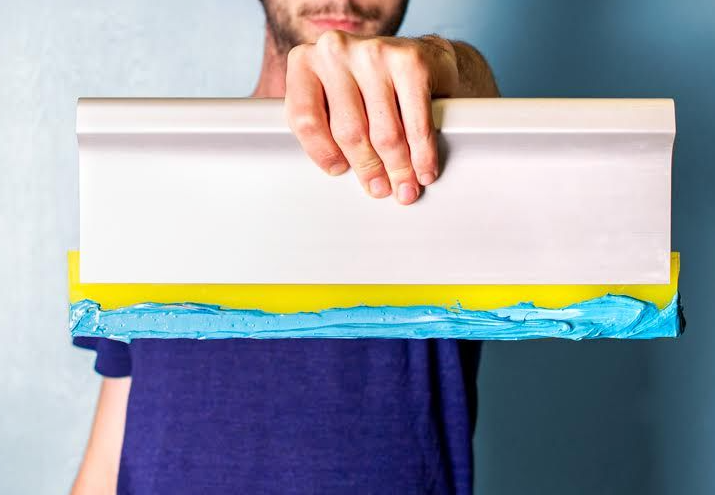
Screen wash is used to clean inchiostro plastisol from screens, squeegees, flood bars and other screen-printing equipment. It is primarily a production-cleaning product, not a garment stain remover.
The timing of the cleaning matters. Fresh plastisol can often be collected before washing, while dried or cured residue may require a stronger ink degrader or a complete screen-reclaiming process. This article explains where screen wash fits in that process and where its limitations begin.
Sommario
Why Squeegee Cleaning Affects Print Quality
You think you can leave a layer of white base on a 70-durometer blade overnight and just start pulling again in the morning? It changes the whole geometry of the stroke. Plastisol residue builds a false edge on the urethane. When that happens, your squeegee angle flattens out, you lose shearing force, and you start laying down a sloppy, thick deposit that smashes into the threads instead of clearing the mesh. If you want a sharp print, the blade has to be razor sharp and bare.
Cleaning Fresh Plastisol from a Squeegee
Card the ink first. Ink costs money. Grab a plastic spatula and scrape every ounce of that heavy white base back into the bucket.
Do not stab the urethane blade with a metal ink knife. You nick that rubber, you buy a new blade. Once the heavy deposit is off, grab a shop rag, hit it with screen wash, and wipe the squeegee clean screen printing squeegee blades down until there’s no color left transferring to the rag.
Removing Dried Ink from the Blade Edge
Newsflash: plastisol ink doesn’t air-dry. If you’ve got hard crust on a squeegee, someone left it sitting too close to a hot flash unit or threw it on top of the tunnel dryer.
When ambient heat partially gels the plasticizer on the rubber, press wash isn’t going to just wipe it off. You have to scrub it, and if it baked completely solid, you’re stuck running that blade through a squeegee sharpener to cut a fresh edge.
Choosing a Compatible Cleaner
Urethane is a giant sponge. If you use aggressive, slow-evaporating solvents and leave the squeegee soaking in a parts washer, the rubber swells up like a dead fish.
| Cleaner Type | What It Does to the Blade | Shop Floor Reality |
| Fast Press Wash | Flashes off quickly | Best for on-press color changes. Doesn’t sit long enough to warp the rubber. |
| Ink Degrader | Heavy oily breakdown | Made for screens in the washout booth. Keep it off your squeegees or they get greasy. |
| Harsh Reducers / Acetone | Melts PVC and rubber | Will permanently soften and distort a 70-durometer blade. Keep away. |
For cleaning plastisol from screens before reclaiming, see our screen wash and equipment-cleaning guide.
What Can Damage a Squeegee Blade?
Metal spatulas. Dropping them on the concrete floor. Leaving them clamped in the press under 80 pounds of pressure over the weekend so the rubber takes a permanent bow. And soaking them in a bucket of hot solvent. Treat your squeegees like precision cutting tools, because that’s what they are.
Inspecting the Blade After Cleaning
Run your thumbnail lightly across the edge of the blade.
If you feel a nick, a dent, or it feels rounded off like a baseball bat, don’t put it back on the press. A nick leaves a heavy line of ink straight down your print. A rounded blade hydroplanes over the ink instead of shearing it, turning your opacity into a muddy mess.
Storage Between Printing Runs
Wipe them and rack them. Flat or hanging.
Do not throw them in a cardboard box where they rest on their blades. If the rubber bends under its own weight for a week, it stays bent.
When to Replace a Squeegee Blade
When you’ve sharpened it down so close to the wooden or aluminum handle that it doesn’t flex anymore. You need blade extension to maintain proper squeegee pressure. Once it’s a stub, throw the rubber in the trash and pull fresh urethane from the roll.
For printed garment cleaning, see our garment plastisol removal guide.
Squeegee Cleaning Safety
Take that solvent-soaked rag you used to clean squeegee after plastisol printing and throw it straight into an OSHA-rated fire can. Piling mineral spirits or press wash rags on a workbench is a fast track to spontaneous combustion.
Domande frequenti
Can I clean my squeegee with water?
No. Water does not break down PVC resin or plasticizer. It just smears the ink into a greasy mess on the handle. You need solvent.
How do I remove ink from squeegee blade crevices?
Use a stiff nylon bristle brush with screen wash. Don’t use a wire brush, you’ll tear the urethane to shreds.
Why is my squeegee blade wavy after cleaning?
You soaked it in harsh solvent. Urethane absorbs heavy chemicals and expands. You ruined the blade. Next time, wipe it and dry it immediately.
Does leaving ink on the blade ruin it?
If the shop gets hot, yes. The ink partially cures on the edge, permanently altering the durometer and making the edge uneven.
How often should I sharpen my squeegee blades?
Whenever you lose your sharp cutting edge. For high production shops, that could be weekly. Run your thumbnail over it—if it’s dull, cut it.