
Table of Contents
If you manage apparel procurement or run a high-volume print shop, you know the landscape has shifted. Brands demand absolute chemical safety but they still expect premium print performance. Transitioning your production lines to eco-friendly, PVC-free plastisol ink is the ultimate strategy to mitigate compliance risks and secure global contracts.
It upgrades your facility to a “trusted supplier” status. You skip the nightmare of customs holds and you show clients you operate with zero chemical liabilities. I have seen massive factories lose vital accounts over trace amounts of banned chemicals. I have also watched mid-sized shops scale into major exporters simply by upgrading their ink chemistry. This isn’t just about corporate sustainability. It is a calculated move to protect your profit margins and increase your operational yield.
Why Apparel Brands Are Moving Away from Traditional Plastisol Ink
Traditional inks were built for cheap volume. You grabbed the lowest-cost buckets and you pushed your automatic presses to the limit. Today, global giants like Nike, Adidas, H&M, and Zara enforce rigid Restricted Substances Lists (RSL). They run a zero-tolerance policy.
If a third-party laboratory detects banned phthalates in your prints, the consequences are catastrophic. The brand rejects the entire shipment and your factory faces permanent blacklisting. Sourcing teams cannot afford that level of supply chain risk. They now prioritize full-cycle chemical transparency over marginal material cost savings.
Eco-Friendly Plastisol Ink vs Traditional Plastisol Ink
When supply chain managers and technical directors evaluate screen printing partners, they strictly audit the chemical makeup of the raw materials. Here is exactly why modern formulations dominate the export market:
| Feature | Traditional Plastisol | Eco-Friendly Plastisol Ink |
| Phthalate Content | Often contains hidden phthalates | 100% Phthalate-Free |
| PVC Content | High | PVC-Free formulations available |
| Specialty Consistency | Unstable puff expansion | Stable 3D ratio, heat-press resistant |
| REACH Compliance | High risk of failure | Fully Compliant |
| OEKO-TEX Standard | Rarely certified | Certified & Audit-Ready |
| Export Risk | High (Customs/Brand rejection) | Low (Zero-risk compliance) |
The Certifications Global Brands Look For
A high-quality print is a severe liability if it lacks proper documentation. When you partner with a certified ink manufacturer, you acquire a legal passport for your garments.
If you target the European market, you must speak REACH. Using a REACH compliant plastisol ink guarantees your prints contain no restricted heavy metals or toxic compounds.
When pitching to apparel buyers, an OEKO-TEX Standard 100 certificate is your strongest asset. An OEKO-TEX certified plastisol ink proves the garment is safe for direct skin contact and this protects the brand from consumer safety lawsuits.
For the US market, CPSIA documentation is strictly required for children’s wear.
Procurement teams will always ask for your Safety Data Sheets (SDS) and Technical Data Sheets (TDS) first. Having these documents ready instantly builds professional trust.
How Low Cure Plastisol Ink Reduces Production Costs
Let’s look at the factory floor. Many technical directors assume compliant ink is difficult to handle or overly expensive. Actually, modern low cure plastisol ink drastically improves your operational efficiency.
Old-school inks require extreme heat to cure properly. They usually bake at 320°F (160°C). Our low cure technology fully cures at 270°F (132°C) so you can turn down your dryer temperatures. This slashes your monthly energy overhead.
Lower heat also solves one of the biggest headaches in screen printing: dye migration. Polyester fabrics bleed color when exposed to high heat. By dropping the oven temperature, you eliminate dye migration on tricky 50/50 blends and 100% polyester performance wear. You scorch fewer garments and your defect rates plummet.
The Technical Challenge: Why Batch Consistency Wins Orders
Procurement managers hate surprises. Sourcing teams evaluate suppliers on reliability and replicability. You must deliver batch-to-batch stability.
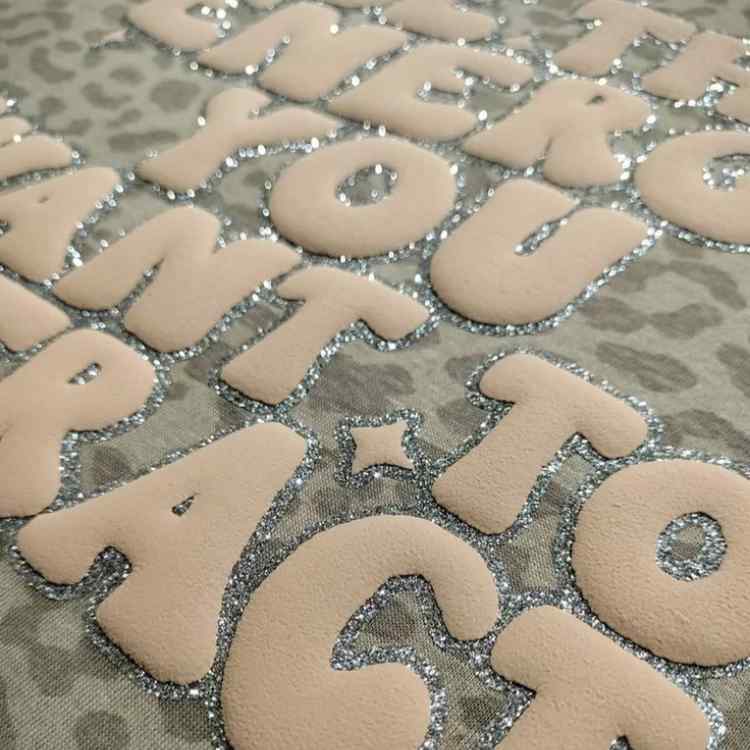
Consider the technical nightmare of puff ink. Buyers love premium 3D textures but poor quality formulations suffer from inconsistent expansion ratios. Sometimes they completely collapse under a heat press. A buyer will cancel an order if the puff height in October doesn’t match the sample approved in May.
A professional supplier guarantees that every batch performs identically. Our specialty inks maintain a stable expansion ratio and they retain a highly durable soft-hand feel after 30+ industrial wash cycles.
How to Evaluate a Plastisol Ink Supplier
If you are upgrading your supply chain, here is the technical checklist procurement professionals use to vet an ink manufacturer:
- Compliance Verification: Can they instantly provide updated REACH, OEKO-TEX, and SDS documents?
- Batch-to-Batch Stability: Do they use strict spectrophotometer quality control to ensure exact color matching across massive volumes?
- Technical Support: Do they provide precise process parameters like mesh counts, squeegee pressure, and curing temperatures?
- Custom Formulation (ODM/OEM): Can they customize a puff expansion ratio or create exclusive white-label formulas for your automatic machines?
- Production Capacity: Can they guarantee stable raw material lead times during your peak manufacturing seasons?
Why HONG RUI SHENG is the Preferred Eco Plastisol Ink Manufacturer
At HONGRUISHENG, we are an ODM screen printing ink manufacturer dedicated to solving high-level production challenges. We engineer high-opacity, high-performance formulations for export-driven printing facilities.
Our inks are 100% phthalate-free and PVC-free. They seamlessly pass global audits. Our low cure technology saves your factory massive amounts of energy while protecting sensitive synthetic fabrics. Furthermore, our puff plastisol formulas offer unmatched physical stability. We supply the exact technical data your operators need to maintain a near-zero defect rate. We remove the guesswork so you can focus on scaling your production.
FAQ
Q1: Is PVC-free plastisol ink as durable as traditional plastisol ink?
Absolutely. Modern PVC-free formulas withstand rigorous industrial wash tests. Whether you print high-stretch athletic wear or thick puff logos, the ink remains flexible and crack-resistant over the garment’s entire lifecycle.
Q2: What certifications should a plastisol ink supplier provide for export orders?
A professional supplier must provide Safety Data Sheets (SDS), Technical Data Sheets (TDS), and updated compliance reports for OEKO-TEX Standard 100, REACH (for Europe), and CPSIA (for the US market).
Q3: Can eco-friendly plastisol ink be used on polyester garments?
Yes. In fact, low cure plastisol ink is the preferred choice. You cure the print at lower temperatures and this effectively prevents the dye migration and fabric shrinkage commonly associated with polyester.
Q4: Does low cure plastisol ink actually reduce factory energy costs?
Yes. You cure at approximately 270°F (132°C) instead of the standard 320°F (160°C). Your facility can lower dryer temperatures and increase belt speeds to cut daily energy consumption significantly.
Q5: How do apparel brands verify ink compliance during an audit?
Brands verify compliance through third-party laboratories like SGS or Intertek. They cross-reference their Restricted Substances List (RSL) against the ink supplier’s SDS and chemical test reports before they ever approve bulk production.
Q6: What documents are required for export apparel printing?
To pass customs and brand inspections smoothly, your prints must be backed by comprehensive SDS/TDS from the manufacturer alongside OEKO-TEX or REACH certificates proving the complete absence of phthalates and heavy metals.