
Om du ger dig in på plastisol bläck på t-shirt, övertänk inte det.
Oavsett om du driver en liten butik i Indonesien, skickar beställningar över hela världen eller trycker varor för lokalbefolkningen i Östeuropa eller Ryssland – grunderna förändras aldrig.
Det som förändras är hur rent man håller saker och hur snabbt man lär sig av misstag.
Låt oss gå igenom det på samma sätt som de flesta riktiga skrivare gör.
Innehållsförteckning
Vad "screentryckt t-shirt" egentligen betyder i praktiken
I sin kärna, screentryckta t-shirts är enkelt.
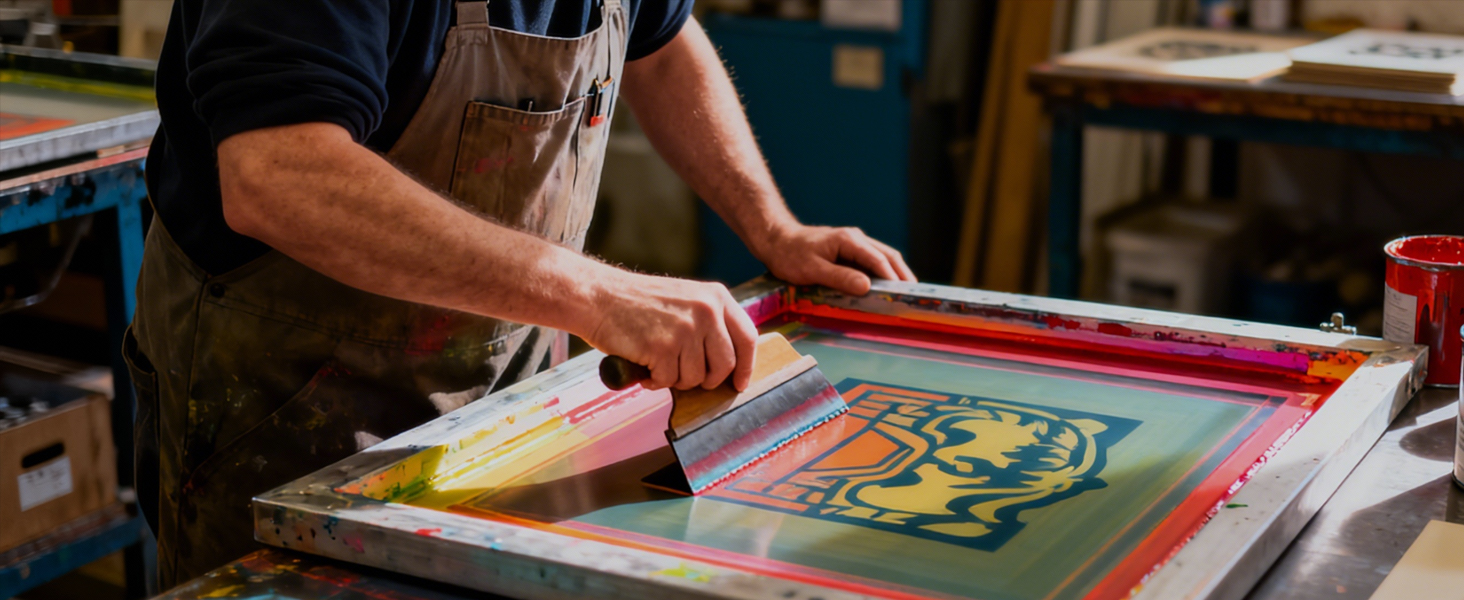
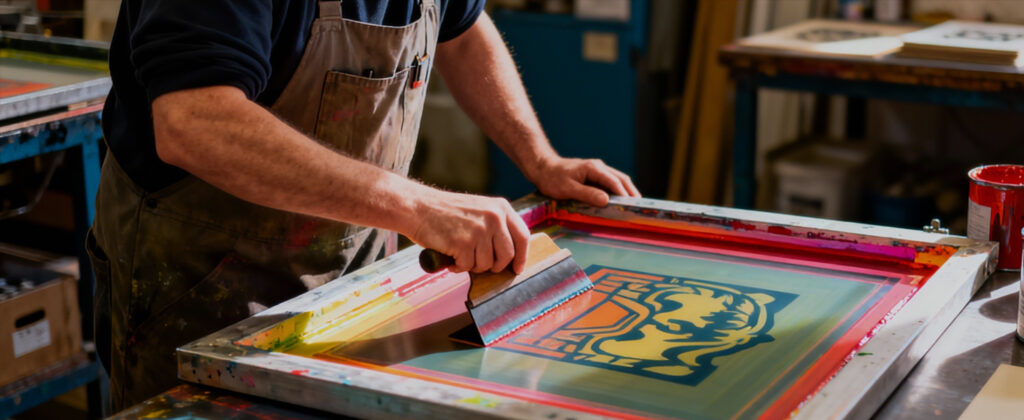
Bläcket går genom en skärm. Mönstret landar på tyget. Värmen låser in det.
Det är allt.
Men bomullströjor, fuktighet, bläckval och härdningsvanor kan förvandla ett "enkelt" jobb till en enda röra om man har bråttom.
På varma platser som Indonesien torkar bläck snabbare.
I kallare regioner, inklusive delar av Ryssland, blir härdningstiden viktigare.
Samma metod. Olika vanor.
Grundläggande installation (ingen avancerad utrustning behövs)
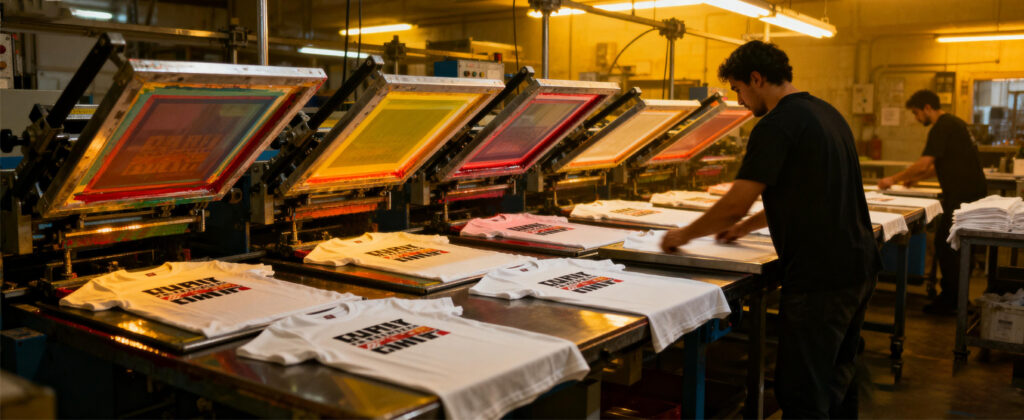
Du behöver ingen enorm fabrik att börja screentryckta t-shirts.
De flesta butiker börjar med:
- En ren skärm med rätt nät
- Bomullströjor (testa alltid först)
- Bläck lämpligt för tygtryck
- En gummiskrapa som faktiskt passar din skärm
- Värmekälla (flashtork eller värmepress)
Den konfigurationen fungerar oavsett om du skriver ut lokalt i Jakarta eller skickar globalt.
Steg för steg: Så här skriver de flesta butiker ut t-shirts
1. Förbered skjortan
Lägg bomullströjan platt. Jämna ut den.
Skrynklor förstör utskrifter snabbare än dåligt bläck.
2. Rikta in skärmen
Ta god tid på dig här. Att rusa iväg med riktningen är nybörjarmisstaget. screentryckta t-shirts.
3. Skriv ut bläcket
Ett stadigt drag.
Inte för mycket tryck. Låt skärmen göra jobbet.
4. Bota det ordentligt
Detta steg är viktigt överallt.
I kallare klimat som Ryssland är underhärdning vanligt.
I heta områden rusar folk och bränner skjortan.
Långsamt och jämnt vinner.
Screentryck t-shirtsJämförelse av bläckval
| Det som spelar roll | Vattenbaserat bläck | Plastisol bläck |
| Känn på bomull | Mjuk, andningsbar | Tjock, upphöjd |
| Titt | Matt, naturlig | Ljus, djärv |
| Torkhastighet | Snabbare | Långsammare |
| Populär användning | Modetröjor, livsstilsmerchandise | Sportkläder, bulkbeställningar |
De flesta globala butiker väljer inte sida.
De byter beroende på jobb.
Regionala anteckningar (Indonesien, globalt, Ryssland)
1.Indonesien och Sydostasien
Värme och fuktighet gör att bläcket kan torka på skärmen. Mindre satser är bra.
2.Globala fraktmärken
Konsekvens är viktigare än hastighet. Testa, dokumentera, upprepa.
3.Ryssland och Östeuropa
Tjockare bomull är vanligt. Rätt härdningstemperatur avgör om hållbarheten påverkas eller inte.
Olika regioner. Samma grunder för screentryckta t-shirts.
Vanliga misstag jag fortfarande ser
- Lämnar bläck på skärmen för länge
- Hoppa över provutskrifter
- Skynda på att härda eftersom "det ser torrt ut"
- Ignorerar tygtyp
Varje butik lär sig detta den hårda vägen.
Vanliga frågor — Endast korta svar
Är screentryckta t-shirts nybörjarvänliga?
Ja. Det är förlåtande om man tar sig tid.
Fungerar bomull bäst?
Ja. Bomull är det enklaste tyget att trycka på.
Kan jag trycka små upplagor?
Absolut. Många butiker har korta serier dagligen.
Varför spricker utskrifter?
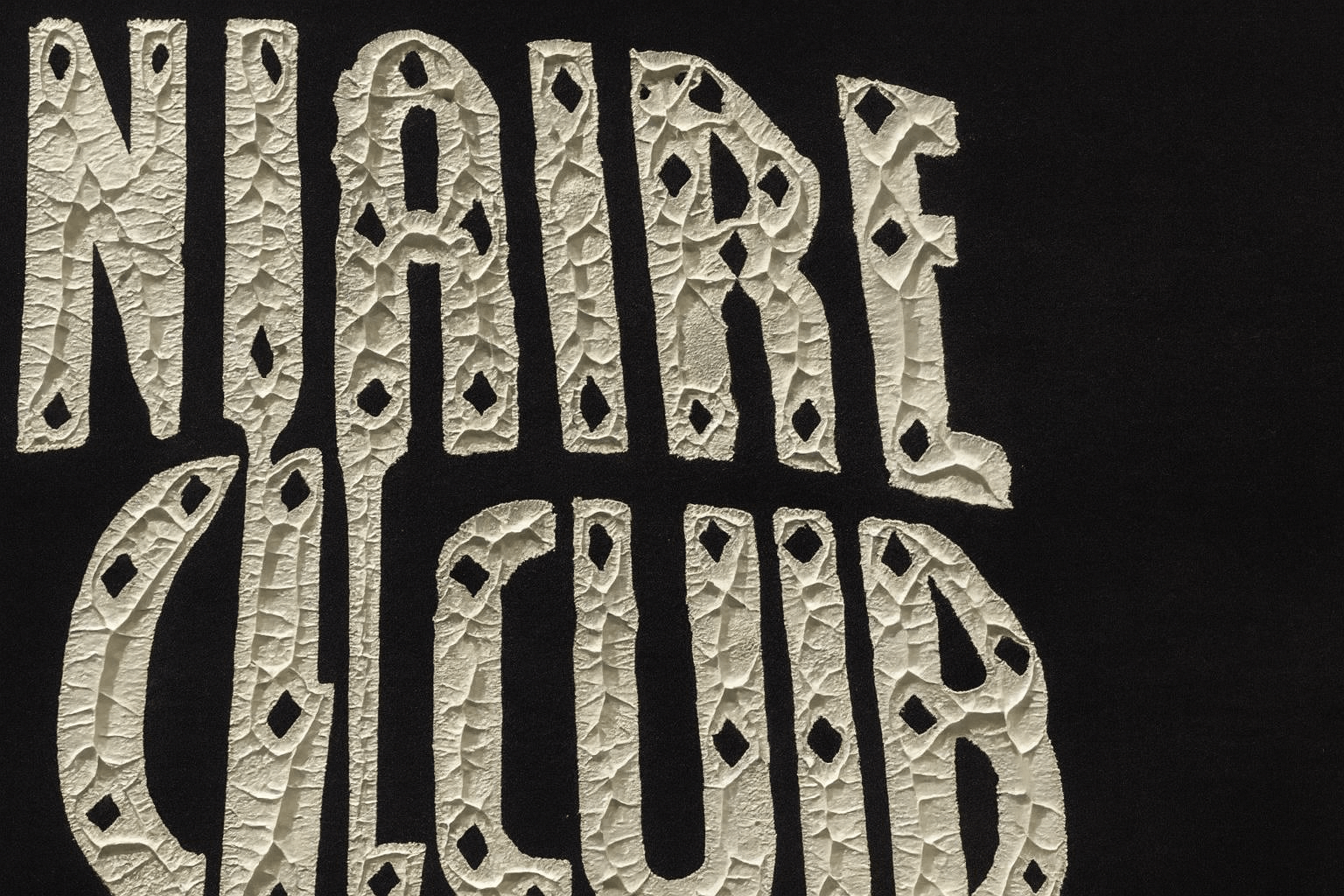
Vanligtvis dålig härdning, inte dåligt bläck.
Används den här metoden globalt?
Ja. Från Indonesien till Ryssland är det samma process.
Slutliga tankar
Screentryckt t-shirt handlar inte om maskiner eller hype.
Det handlar om tålamod, rena vanor och att lära sig hur tyg reagerar.
Det är därför den här metoden fortfarande fungerar över hela världen – små studior, förklara globalt och på platser där tryckkulturen är djupt rotad.
Få grunderna rätt, så följer resten.