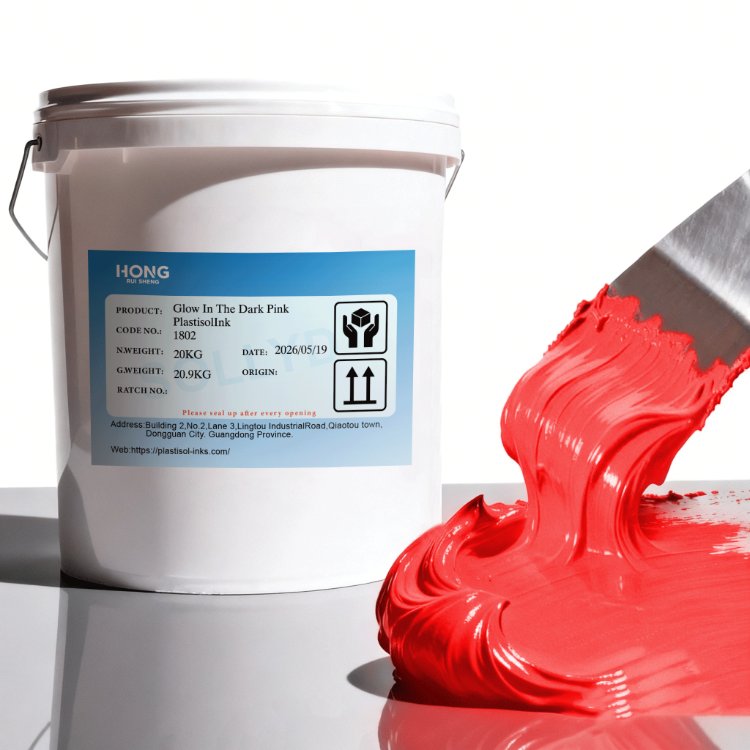
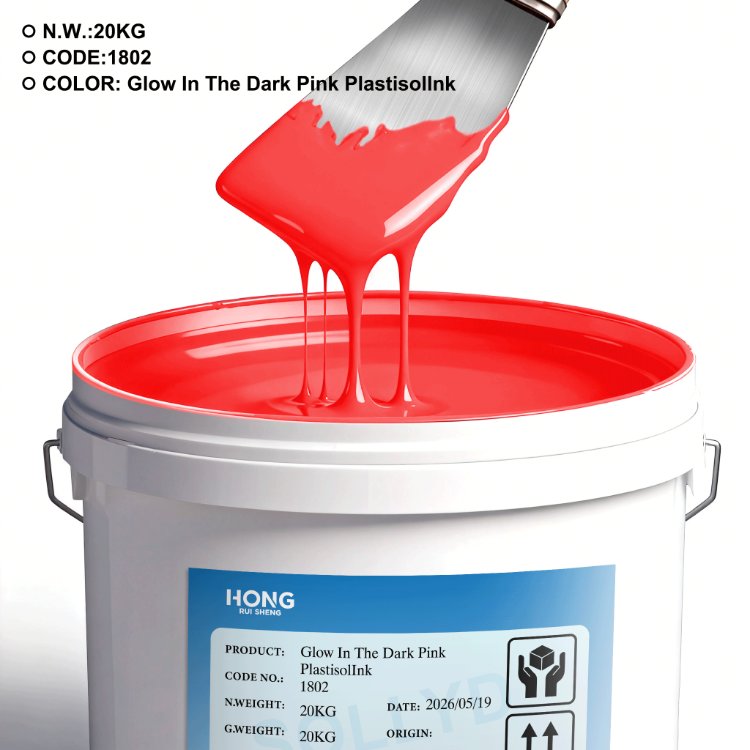
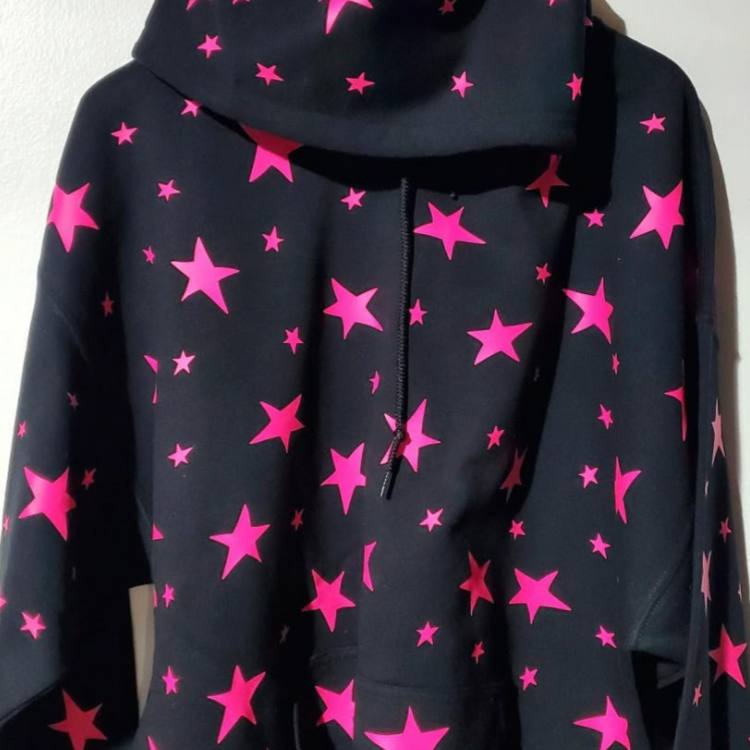
Listen, if you’ve been in the screen printing game as long as I have, you know that “cool” sells. But “magic”? Magic builds empires.
I remember my first big order for a music festival back in the day. The client wanted something that would truly “pop.” I gave them neon, and they liked it just fine. Everything changed when I spotted a rival shop’s shirt under the club lights. It didn’t just glow; it practically popped off the fabric. Standing there, I realized my standard prints just couldn’t compete. That was the moment it clicked: Glow In The Dark Pink Plastisol Ink isn’t just inventory. It’s a massive competitive advantage.
So, I’m letting you in on the trade secrets today. We’re going to talk about why most “glow” inks fail to impress, why pink is notoriously the hardest color to get right, and exactly how we at HONG RUI SHENG finally cracked the code to help you squeeze more profit out of every single print.
The “Oh Wow” Factor: Why Pink Glow is Taking Over
Most people think of “Glow in the Dark” and picture that sickly, pale green color from those 1980s ceiling stars. Forget all that. Look, it’s 2025. The market isn’t just asking for “pink” anymore; they are screaming for that “Cyberpunk Pink” or the “Electric Rose” vibe that hits differently under the lights.
Neon and phosphorescent colors have seen a 25% surge in demand for “event-based” streetwear (think EDM festivals, night marathons, and high-end club wear).
But here’s the kicker: Pink is famously difficult to pull off. To get a true pink glow, you can’t just throw some glitter into a bucket of goop. You need high-grade phosphorescent pigments that don’t shift to a weird orange the second they hit the heat of your dryer.
Why HONG RUI SHENG INK is the Choice of Professionals
Trust me, I’ve spent years in the Screen Printing Ink Factory environment. I’ve put up with some nasty-smelling ink and tossed way too many ruined shirts in the bin. So, when we sat down to create our own Glow in the Dark Plastisol Ink, we focused on three non-negotiables:
It has to be bright. (Nobody wants a “dim” glow that disappears in minutes).
It has to be creamy. (If it’s like printing with wet sand, your arms will give out by noon).
It has to stay on. (Nobody wants their hard work peeling off after a single wash).
As a leading Plastisol Ink Manufacturer, we don’t just sell you a bucket; we sell you a result that keeps your clients coming back.
The Technical Deep Dive: Making It Work
Let’s get nerdy for a second. If you want that pink to scream in the dark, you can’t just wing it. Here is the “Golden Ratio” for printing with our specialty inks.
1. The Underbase (The Secret Sauce)
Think about it—you wouldn’t build a mansion on a swamp, right? So, whatever you do, don’t just slap glow ink directly onto a black shirt and hope for the best. The fabric will simply swallow the ink, and your glow will vanish. You need a rock-solid White Plastisol Ink as your foundation. Our High Opacity Plastisol Ink creates a reflective “mirror” under the glow ink, pushing the light back out toward the eye.
2. Mesh Counts: Bigger is Better
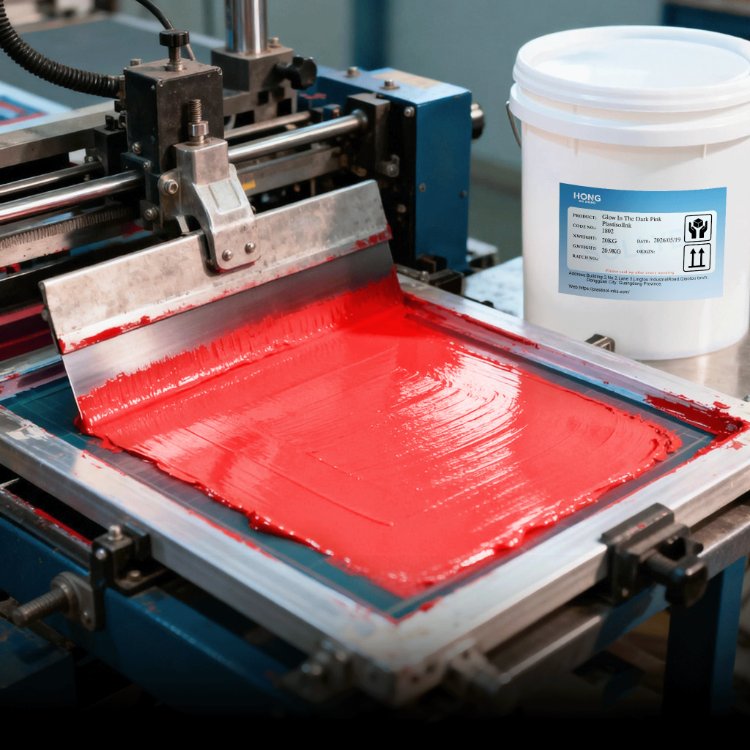
In the world of Screen Printing Plastisol Ink, we usually love high mesh for fine detail. Here’s the thing: glow pigments are “chunky”—way bigger than your standard pigments. Trying to force them through a 305 mesh is basically like trying to shove a basketball through a lace wedding veil. It’s just not going to happen.
Recommendation: Use an 86 to 110 mesh (34-43T). This lets those big, juicy glow particles sit right on top of the fabric where they belong.
3. Curing: Don’t Burn the Pink
Pink pigments are heat-sensitive. If you crank your dryer to 400°F, your beautiful pink will turn into a weird salmon-brown. Our Low Cure Plastisol Ink is designed to set at a safe 320°F (160°C).

Performance Data: HONG RUI SHENG vs. The Other Guys
I’ve always said, “don’t just take my word for it—let the results speak.” Here is how our Pink Glow stack up against those standard “budget” inks you might find floating around the wholesale market.
Table 1: Comparative Analysis of Glow Performance
| Feature | HONG RUI SHENG Pink Glow | Standard “Budget” Glow | Why it matters |
| Glow Duration | 4 – 6 Hours | 45 – 60 Minutes | Your customers want that glow to survive the whole party, not just the first drink. |
| Pigment Density | High (35%+) | Low (15-20%) | More pigment literally means a brighter, more aggressive shine. |
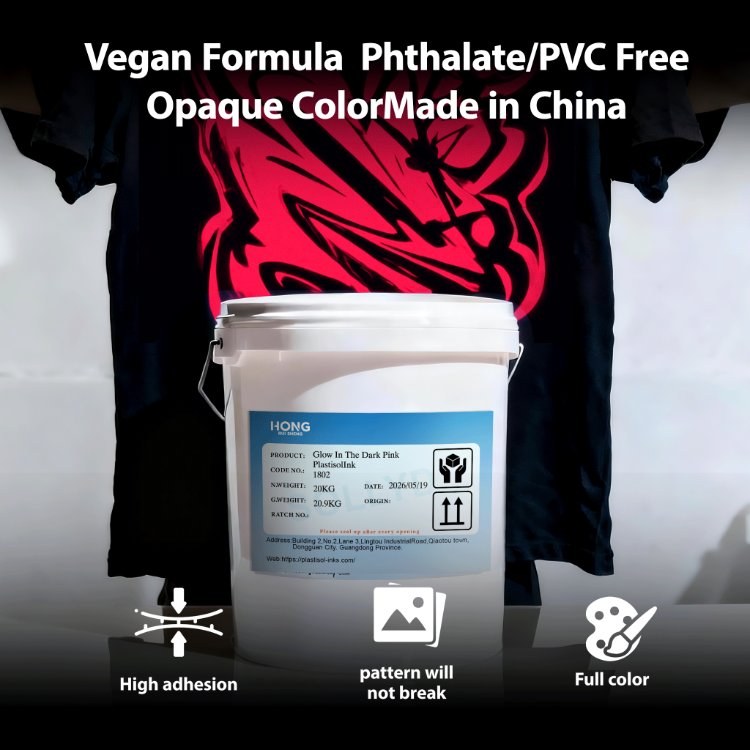
| Phthalate Content | Phthalate-Free | Often contains PVC/Lead | Our formula keeps the nasty stuff out—better for the planet, and definitely better for your lungs. |
| Texture | Smooth / Creamy | Gritty / Sandy | Easier on your squeegees and much faster to print. |
| Opacity | Excellent | Semi-Transparent | You get better coverage with fewer passes, saving you time. |
The Economics of Glow: Turning Ink into Gold
I get it. You’re probably thinking, “Robert, these specialty inks are pricey!” And you’re right. But honestly? That’s exactly why you should love them.
If a standard T-shirt print costs you $0.50 in ink and you sell the shirt for $20, your margin is fine. But if you use Wholesale Plastisol Ink with a killer glow effect, your ink cost might go up to $1.50, but you can easily retail that same shirt for $35 or $40.
The math is simple: you spend an extra buck on quality and walk away with an extra fourteen dollars in profit. That’s not just printing; that’s smart business.
Pro-Tips from the Factory Floor
After watching thousands of gallons of ink go through our Screen Printing Ink Supplier channels, I’ve picked up a few tricks that will save your skin:
The Double-Hit: Hit it twice. Seriously, giving it two coats of the pink glow over that white base makes a world of difference. It creates a “nuclear” glow that standard prints can’t touch.
Avoid Thinners: I see guys adding reducer to glow ink because it feels thick. Stop it. You’re just diluting the power. If it’s cold, just stir it for five minutes. The friction will naturally “cream” the plastisol.
The UV Test: Always keep a small UV flashlight at your QC station. It “charges” the ink instantly so you can check for pinholes or uneven coverage without having to run into a dark closet like a crazy person.

Environmental Responsibility (Because we care)
We live in a world that is (rightfully) getting stricter about chemicals. If you are printing for big brands, they are going to ask for your MSDS sheets. Our PVC-Free Plastisol Ink options and our commitment to being a Phthalate-Free Plastisol Ink manufacturer mean you can sleep easy. At the end of the day, you’re not just cranking out pretty shirts—you’re doing it the right way, safely.
Frequently Asked Questions (The “Real Talk” Version)
Q1: Can I mix Pink Glow with other colors?
You can, but you’ll probably kill the glow. Glow pigments work best when they aren’t fighting other pigments for “space” in the ink. If you want a different shade, use our Plastisol CMYK Ink for the surrounding design, but keep the glow sections pure.
Q2: Does it work on polyester sportswear?
Yes, but you absolutely need an Anti Migration Printing Ink base. If you print pink on a black polyester shirt, the black dye will “bleed” into your pink and ruin the effect. Use a blocker!
Q3: How many washes will it last?
If cured correctly at 320°F, our Fabric Screen Printing Ink will outlast the shirt itself. We’ve tested it for 50+ industrial washes with no loss of glow.
Q4: Is it safe for baby clothes?
Absolutely. Since we are a Plastisol Ink Wholesale provider that focuses on eco-friendly formulas, our inks meet most major safety standards.
Q5: Why is my glow ink “settling” in the bucket?
That’s just physics. These pigments are heavy! Always give your Screen Printing Ink a good mechanical stir before you put it on the screen.
Wrapping Up: Your Next Move
Listen, the screen printing industry is crowded. If you’re just another shop printing flat colors on cheap cotton, you’re competing on price. And competing on price is a race to the bottom.
But when you offer Glow In The Dark Pink, you’re offering an experience. You’re the guy who makes the “cool shirts.”
At HONG RUI SHENG, we’ve spent decades perfecting the chemistry so you don’t have to. We are more than a Screen Printing Ink Factory; we are your partner in growth. Ready to light up your sales? Grab a gallon of our Pink Glow and show your customers what they’ve been missing.
Related products
- Special Series
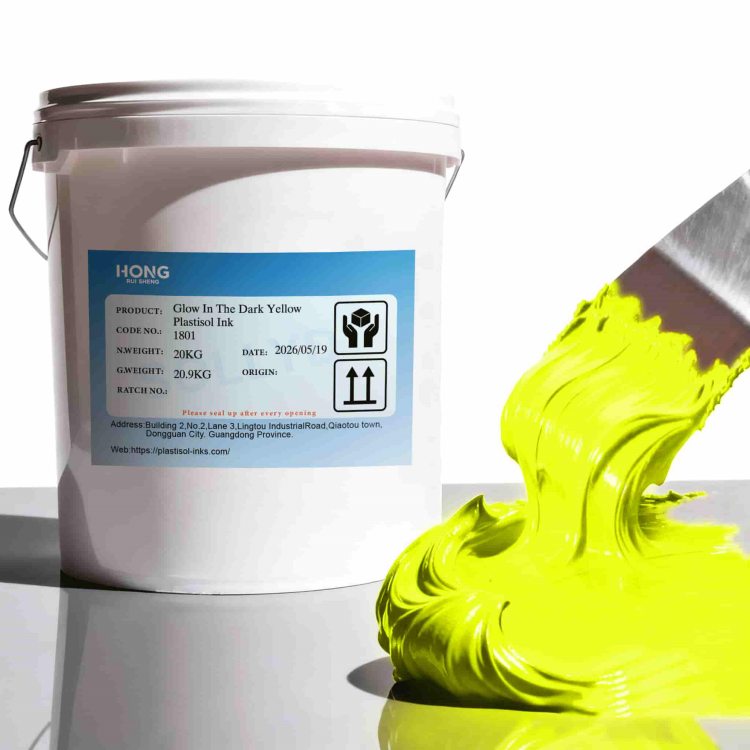
Glow In The Dark Yellow Plastisol Ink
- Special Series
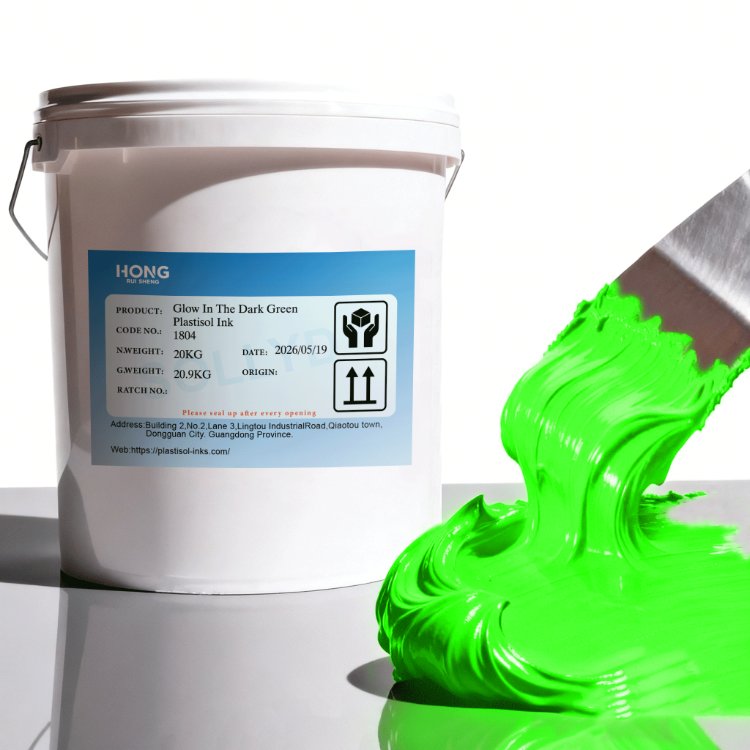
Glow In The Dark Green Plastisol Ink
- Special Series
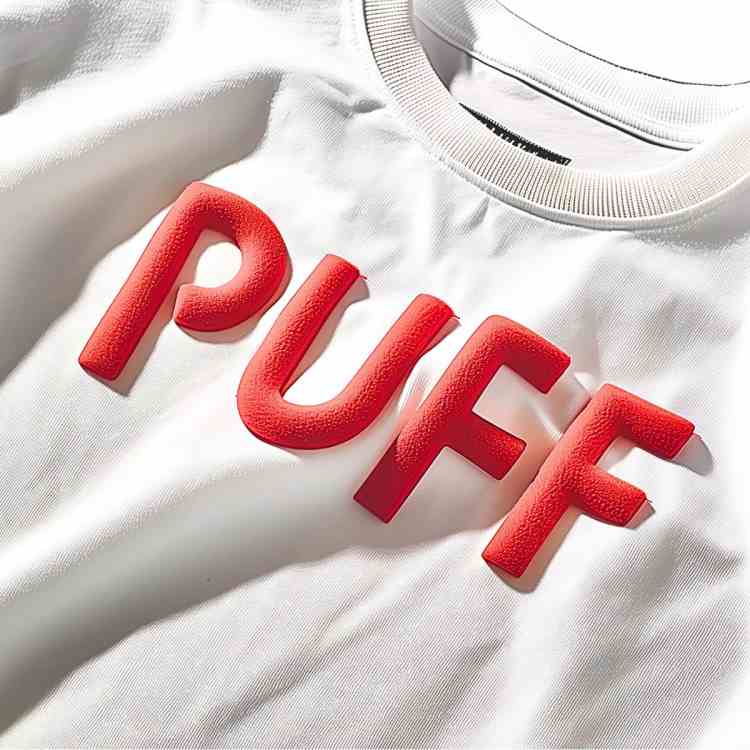
Puff Plastisol Ink