
جدول المحتويات
For a high-volume garment printing factory, the choice between plastisol and water-based ink isn’t just about the “feel” of a T-shirt. It’s a decision that dictates your production speed, your waste margins, and your equipment setup. Let’s get straight to the point: for high-volume plants dealing with dark garments or synthetic blends, plastisol ink usually wins. Its screen stability and sheer production efficiency are honestly hard to beat.
Partnering with the right مُصنِّع حبر البلاستيسول means your presses can literally run around the clock. Since you don’t have to worry about ink drying in the mesh, you end up with much lower labor costs and a higher output at the end of every shift.
The Production Reality: Why Stability Wins
The biggest headache in any screen printing shop is downtime. When a press stops, money disappears. This is where the fundamental chemistry of these two inks creates a fork in the road for production managers.
Screen Stability and the “Drying” Problem
Water-based stuff works by evaporation. As soon as it hits the air on your screen, the clock starts ticking. If your operator takes a quick 15-minute break or if a machine hits a snag, that ink will start clogging up the fine mesh. Then you’re stuck wasting time and chemicals just to get things moving again.
Plastisol ink, however, is a thermoplastic. It stays wet until it reaches your dryer’s high heat (around 320°F or 160°C). You can safely leave it on the screen overnight and start printing immediately the next day. For a factory floor, this “open time” is a massive advantage.
Best Practice: The “Flash and Go” Technique
If you want to push your production speed to the limit, use a solid flash cure unit between colors. This makes “wet-on-wet” printing actually feasible. Since the ink doesn’t dry in the screen, you can run thousands of units of حبر بلاستيسول عالي التعتيم without having to stop and “mist” the screens with water or retarders, which is a constant requirement for water-based setups.
Comparing Performance: A Factory Perspective
| ميزة | Plastisol Ink (HONG RUI SHENG) | حبر مائي |
| شفافية على القماش الداكن | High (Often one hit + flash) | Low (Requires multiple hits) |
| سرعة الإنتاج | Fast (Wet-on-wet friendly) | Slower (Screen clogging risks) |
| Waste Control | Near Zero (Leftover ink is reusable) | High (Ink dries and becomes trash) |
| ملمس اليد | Heavier (Can be softened) | Extremely Soft (In-fiber feel) |
| متطلبات المعالجة | Standard Conveyor Dryer | Forced Air / High Airflow Dryer |
Opacity and the Challenge of Dark Garments
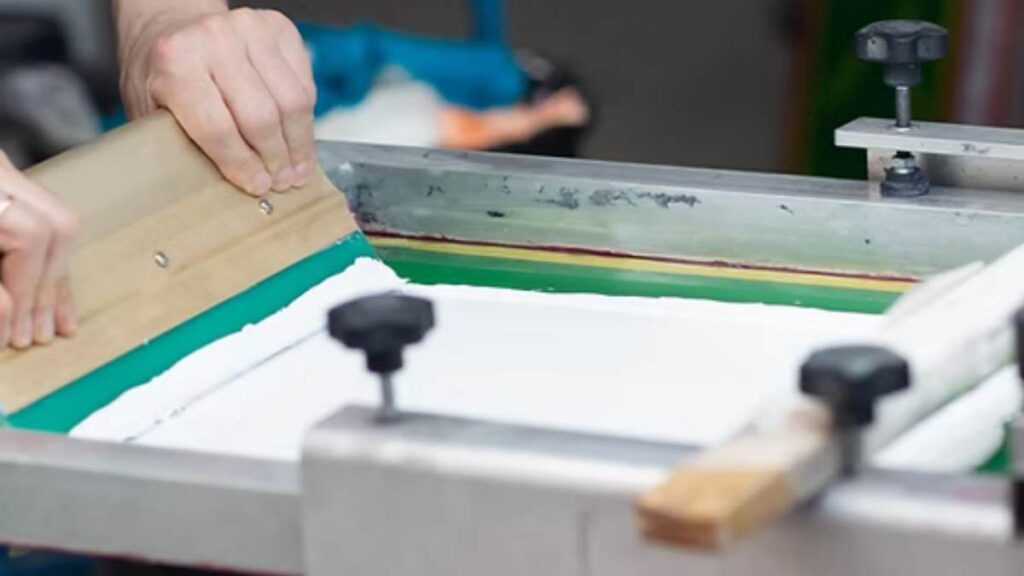
Printing on dark fabrics like navy or black is common. Making neon yellow or white stand out on these shirts requires high opacity.
Since water-based inks are translucent, you usually have to print, dry, and print again just to get the color right. That kills your production time. حبر بلاستيسول أبيض is a different story; it’s loaded with titanium dioxide pigments. It sits right on top of the fabric instead of soaking in, so you get that vivid “pop” much faster.
Dealing with Migration on Polyester
When printing on polyester or poly-blends, “dye migration” is a factory’s worst nightmare. This happens when the dye from the fabric bleeds into the ink during the heating process. Water-based inks offer very little protection against this.
However, at HONG RUI SHENG, we recommend using a specialized حبر طباعة مضاد للهجرة as a grey underbase. This creates a chemical barrier that keeps your colors crisp. That kind of control is exactly why big garment factories still lean on plastisol when it comes to jerseys and high-performance athletic wear.
Hand Feel: Can Plastisol Compete?
You’ve probably heard people praise water-based ink for that “soft hand feel.” Because it dyes the fibers, the print almost disappears into the shirt. We’ve all seen old-school plastisol that felt like a heavy plastic shield on your chest—no one wants that anymore.
But modern chemistry has changed the game. By using high mesh counts (230 to 305 mesh) and adding thinners or “soft hand” bases, a skilled printer can achieve a print that is nearly as soft as water-based ink but with the production benefits of plastisol.
Best Practice: Achieving the Soft Touch
If a client demands a soft feel but you want to keep the production speed of plastisol, use a “halftone” design or a higher mesh screen. Reducing the ink deposit while using stretch plastisol ink allows the garment to remain breathable and flexible without the headache of water-based ink management.
Waste Control and Cost Efficiency
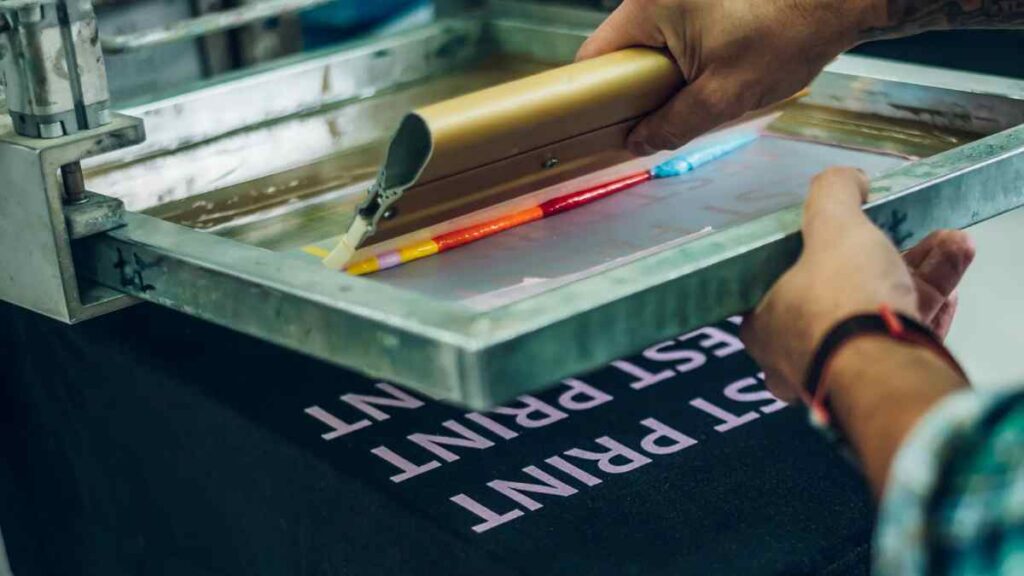
On a busy factory floor, every gram of ink is money. With plastisol ink wholesale, any leftovers on the screen can simply be scooped back into the bucket for the next job. It doesn’t go bad.
- Water-Based Waste: Once you mix water-based ink with certain “crosslinkers” or “catalysts” to make it stick to tough fabrics, it has a “pot life.” If you don’t use it in 4-8 hours, it becomes a solid brick in the bucket. You have to throw it away.
- الخلاصة: If you’re in charge of procurement, you know the cost-per-print isn’t just about the price of the bucket. It’s about how much ink actually makes it onto the shirt. In large-scale manufacturing, plastisol almost always wins the yield battle.
Environmental Concerns and Safety
Let’s talk about the “green” factor. There’s this common myth that all plastisol is toxic while water-based is perfectly safe. Honestly? That’s a huge simplification. Modern plastisol ink manufacturer standards have evolved.
At HONG RUI SHENG, we produce phthalate-free and lead-free inks that meet strict international safety regulations. While water-based ink uses water as a solvent, the pigments and binders are still chemicals. Furthermore, the massive amount of water used to clean screens in a water-based shop can actually create more environmental strain if the wastewater isn’t treated properly. Plastisol screens can be cleaned with recirculating soy-based solvents, creating a “closed-loop” cleaning system.
The Verdict for Garment Printing Factories
If you’re running a small boutique shop doing short runs of vintage pima cotton shirts, water-based ink makes total sense. That soft feel is your main selling point. But, if you’re a factory manager looking at a 10,000-unit order for dark hoodies or gym wear, plastisol is really the only logical way to scale. It offers:
- انسداد الشاشة الصفرية during long shifts.
- Superior opacity on dark and synthetic fabrics.
- Lower waste because the ink stays usable in the bucket indefinitely.
FAQ: What Factory Owners and Buyers Ask
Q1. How does plastisol ink handle high-stretch athletic fabrics?
Standard inks might crack when the fabric is pulled. Actually, we’ve developed a specialized stretch plastisol ink just for Lycra and Spandex. We packed it with a high resin content so it can stretch and snap back without losing its grip on the fabric.
Q2. Can we use plastisol for heat transfer labels?
Yes. In fact, plastisol is the industry standard for “cold peel” and “hot split” transfers. Using a proper heat transfer printing ink lets you print designs in reverse on film or paper. You can store those and apply them as orders come in, which really helps keep your inventory costs down.
Q3. Is there a way to lower the curing temperature to save energy?
Absolutely. Many factories are moving toward “Low Cure” additives. This lets the ink set at 270°F (132°C) instead of the usual 320°F. It’s a double win: you save on power and you stop “scorching” those touchy synthetic fabrics.
Q4. How long does it last in storage?
This is a huge deal for purchasing. While water-based inks might separate or grow mold in a year, a sealed bucket from a solid plastisol ink manufacturer can easily last over two years if you keep it somewhere cool and dry.
Q5. Does plastisol meet “Phthalate-Free” requirements for major brands?
Yes. Top retailers require Phthalate-free and PVC-free certifications. Our specialized lines fully comply with these standards, allowing your factory to bid on global contracts without compliance issues.