
Table of Contents
If you want the short answer to why big brands are suddenly obsessed with their ink chemistry, here it is: global compliance, massive energy savings, and bulletproof print durability. Actually, switching to eco-friendly plastisol ink isn’t just some “green” trend for garment factories but it is the only way to stay in the game. You avoid getting hit by shipment rejections and you stop paying skyrocketing utility bills.
For factory owners and procurement teams, moving toward non-phthalate and PVC-free formulas is a smart move for long-term survival. It keeps your shop compliant and it makes your production costs much more predictable.
The Compliance Nightmare: Why Brands Can’t Wait
Think about the risk of a single failed lab test. Major retailers like Nike, Inditex, and H&M have updated their Restricted Substance Lists (RSL) to be tighter than ever. If a shipment to Europe or the US shows even a trace of banned phthalates, that entire container is going to be seized or destroyed.
The European Chemicals Agency (ECHA) doesn’t take REACH violations lightly. This is exactly why smart manufacturers are sourcing screen printing plastisol ink that carries OEKO-TEX Standard 100 certification. Providing a brand manager with a pre-certified ink report isn’t just “good service”—it’s what wins the contract.
Performance: Killing the “Eco-Inks Are Weak” Myth
In many print shops, there’s an old rumor that eco-friendly inks are thin or crack easily. Honestly? That is completely outdated. Modern white plastisol ink now hits the fabric with more opacity and a smoother finish than the toxic stuff from ten years ago.
For activewear, where fabric stretch is everything, you’ll find that stretch plastisol ink is actually superior. These formulas use high-elongation resins. When the athlete moves, the print moves. No “smiling,” no cracking, and no customer returns.
A Quick Reality Check: Traditional vs. Eco-Plastisol
| Feature | Old-School Ink | Eco-Plastisol (HONG RUI SHENG) |
| Legal Status | High risk (Phthalates/PVC) | 100% Compliant (REACH/ZDHC) |
| Dryer Temp | 160°C (Hot & Costly) | 130°C – 140°C (Low Cure) |
| Stretch | Cracks on spandex | High elasticity |
| Shop Safety | Harmful fumes | Skin-safe / Non-toxic |
The Shop Floor Reality: Curing Inks for Less Cash
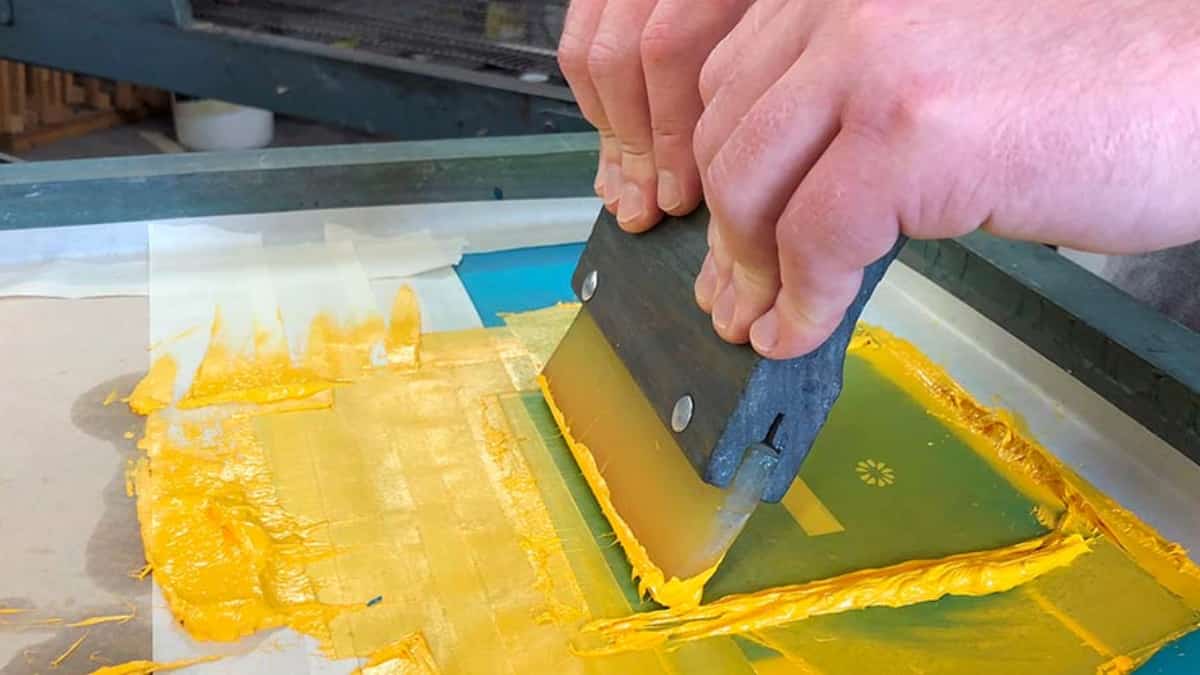
Let’s talk about the biggest money-sink in your workshop: the conveyor dryer. Running these machines at 160°C (320°F) all day is like burning money. It eats up electricity and, quite often, scorches delicate polyester fabrics.
By switching to low cure plastisol ink, the math changes immediately:
- Lower Power Bills: Dropping your dryer temp by 20°C can slash your energy consumption by 15% or more.
- Save the Fabric: Low heat means zero shrinkage and zero scorched garments.
- Push More Volume: Because the ink reaches its “gel” state faster, you can often speed up the belt. More shirts per hour equals more profit.
Production Tip: Don’t just trust the dryer’s digital readout. Use a laser thermometer to check the actual temperature of the ink film. In many cases, you’ll find you can cure low cure plastisol ink much faster than you thought, saving even more on the bottom line.
Solving the “Dye Migration” Headache
If you’ve ever seen a white print turn pink on a red polyester shirt, you know the pain of dye migration. It’s a factory’s worst nightmare because you usually don’t see it until the shirts have been in boxes for two days.
The fix is simple: use an anti migration printing ink as a base layer. This acts as a chemical “blocker,” trapping the fabric dyes so they don’t bleed into your top colors. It is the only way to keep your whites bright and your colors crisp on synthetic blends.
Why HONG RUI SHENG is the Choice for Top Factories
As a leading OEM/ODM manufacturer, HONG RUI SHENG focuses on the specific technical hurdles found in high-volume print shops. Whether a factory needs bulk plastisol ink for basic cotton tees or specialized formulas for heat transfers, the consistency remains the same.
The goal isn’t just to sell a bucket of ink; it’s to provide a solution that doesn’t dry out on the screen but cures perfectly in the tunnel. That reliability is exactly why brands trust us for their long-term supply chains.
The Bottom Line
In today’s market, quality is just the entry fee. Compliance and efficiency are what actually keep a factory profitable. Switching to eco-friendly, low-cure solutions allows you to:
- Pass brand audits with zero stress.
- Cut overhead by lowering energy usage.
- Reduce waste by stopping fabric damage and migration issues.
FAQ: What Procurement Managers Actually Care About
Q1.Why is “non-phthalate” so important for kids’ wear?
Because regulations like CPSIA in the US and REACH in the EU are extremely strict when it comes to children’s products. Using non-toxic plastisol ink basically gives you peace of mind — even if a child touches the print directly, there are no hazardous chemicals involved. It’s simply a safer choice for kids’ apparel markets.
Q2.Is your ink officially OEKO-TEX Standard 100 certified?
Yes — every batch of HONG RUI SHENG eco-series ink is designed to pass OEKO-TEX, REACH, and ZDHC audits. In fact, we keep full documentation ready so your factory can stay “export-ready” without extra back-and-forth when clients request reports.
Q3.Does low-cure ink compromise wash-fastness?
Not really. In many cases, you’ll actually find the wash durability is even better, because the ink film stays more flexible compared to traditional stiff inks. The key point is simple: just make sure the ink reaches its target temperature (around 135°C), then the bond will fully lock in.
Q4.Can I use these for heat transfer labels?
Yes, absolutely. A lot of customers actually use our formulas as heat transfer printing ink for tagless labels, sports numbers, and similar applications. Once it’s properly applied, it holds up well in washing and daily wear, so durability is not an issue.
Q5.How do I handle thick ink in a cold warehouse?
Plastisol can feel a bit stiff when temperatures drop — that’s normal. It’s thixotropic, so once you start stirring it or the squeegee gets moving, it becomes smooth again. If you’re running fine meshes and need it looser, just add a very small amount of eco-reducer. That usually solves it without affecting opacity.