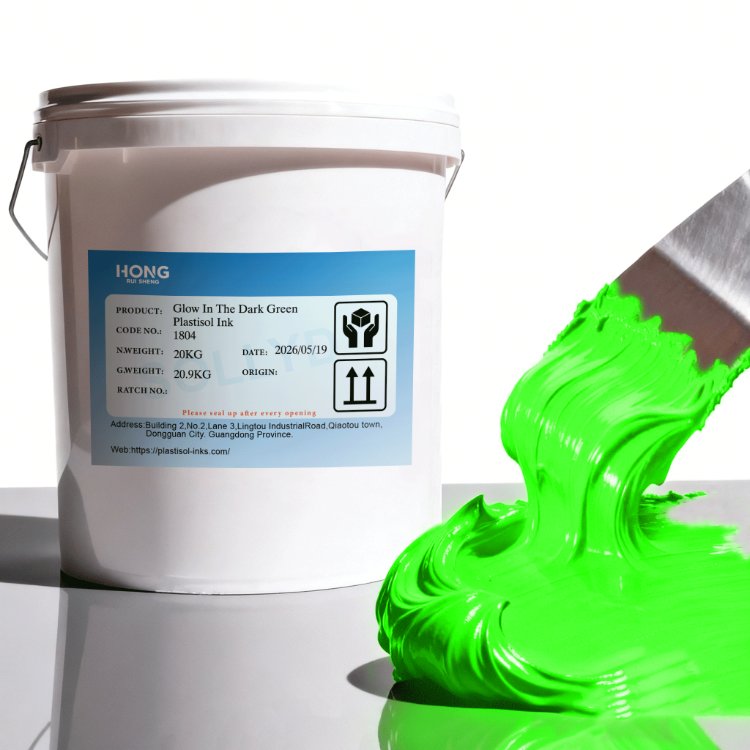
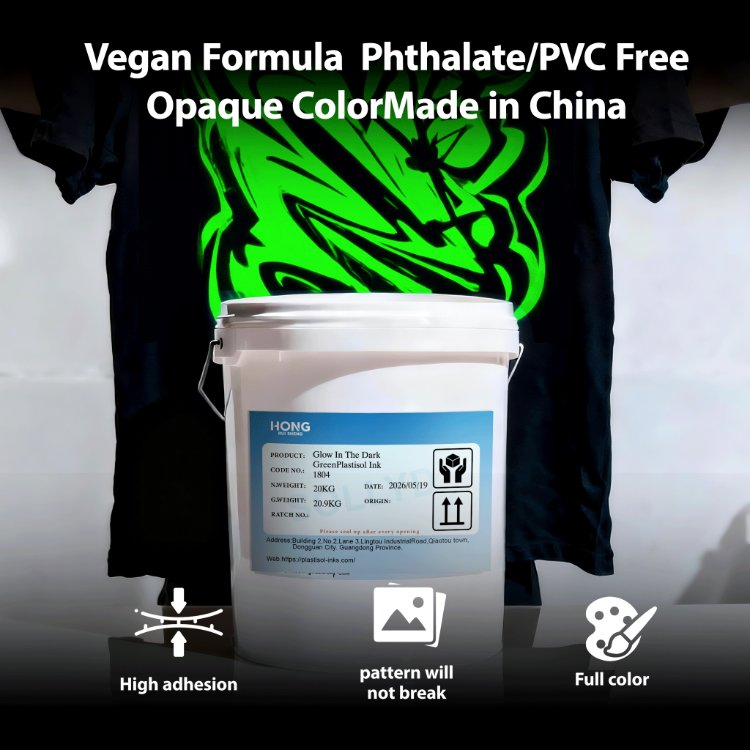
I’ve spent a lot of my life around the smell of curing ovens and the rhythmic “shuck-shuck” of a manual press. If you’ve been in the screen printing game for more than a week, you know that standing out is the only way to keep your margins from hitting the floor. You can’t just sell a t-shirt anymore; you have to sell an experience. That’s why I want to talk to you about something that literally turns heads in a dark room: Glow In The Dark Green Plastisol Ink.
At my company, HONG RUI SHENG INK, we don’t just cook up batches of chemicals. We engineer solutions for printers who are tired of mediocre results. Look, I’ve seen it all. I’ve seen prints that look great on the rack but peel off after one wash. I’ve seen “glow” ink that barely flickers after a full day in the sun. It’s frustrating and it’s a waste of your hard-earned money.
In this guide, I’m going to pull back the curtain on how to master this specialty ink. Whether you are a shop owner looking for a Plastisol Ink Wholesale partner or a printer trying to nail a difficult job, this is for you.
Why Green Glow is the Undisputed King
You might wonder why everyone chooses green. Why not blue or purple? Well, science has a funny way of dictating our fashion choices. The human eye is naturally more sensitive to green wavelengths. According to research on photoluminescence, Strontium Aluminate—the good stuff we use in our Screen Printing Plastisol Ink—glows significantly longer and brighter in the green spectrum than any other color.
When you use our Glow in the Dark Plastisol Ink, you aren’t just getting a “neon” look. You are getting a high-density charge that lasts for hours. This isn’t the cheap Zinc Sulfide ink from the 1990s. This is the modern standard.
The Physics of the “Charge”
Think of your print like a battery. The pigments inside the ink absorb photons from light sources (sunlight, UV, or even office LEDs). When the lights go out, those pigments release that energy. If your ink is cheap, the “battery” is small. If you use a high-quality Fabric Screen Printing Ink, that battery is a powerhouse.
Technical Specifications: The HONG RUI SHENG Standard
Before you start slinging ink, you need to know what you’re working with. Here is a breakdown of how we formulate our top-tier green glow ink at our Screen Printing Ink Factory.
Table 1: Performance Metrics of HONG RUI SHENG Glow Ink
| Feature | Specification | Benefit to the Printer |
| Pigment Type | Strontium Aluminate | 10x brighter than Zinc Sulfide alternatives |
| Base | High-Clarity Plastisol | Ensures maximum light transmission |
| Glow Color | Neon Radioactive Green | Highest visibility in total darkness |
| Curing Temp | 320°F (160°C) | Standard curing so you don’t need new equipment |
| Compliance | Phthalate-Free | Safe for kids’ clothes and eco-conscious brands |
Step-by-Step: How to Print It Like a Pro
I’ve had guys call me up saying their glow ink looks “muddy.” My first question is always: “What’s underneath it?”
1. The Underbase is Your Best Friend
If you are printing on a black shirt, the fabric will eat your glow. It’s like trying to shine a flashlight through a piece of charcoal. You must use a high-opacity White Plastisol Ink as a base. This white layer acts like a mirror and it bounces the light back through the glow particles.
2. Mesh Counts Matter
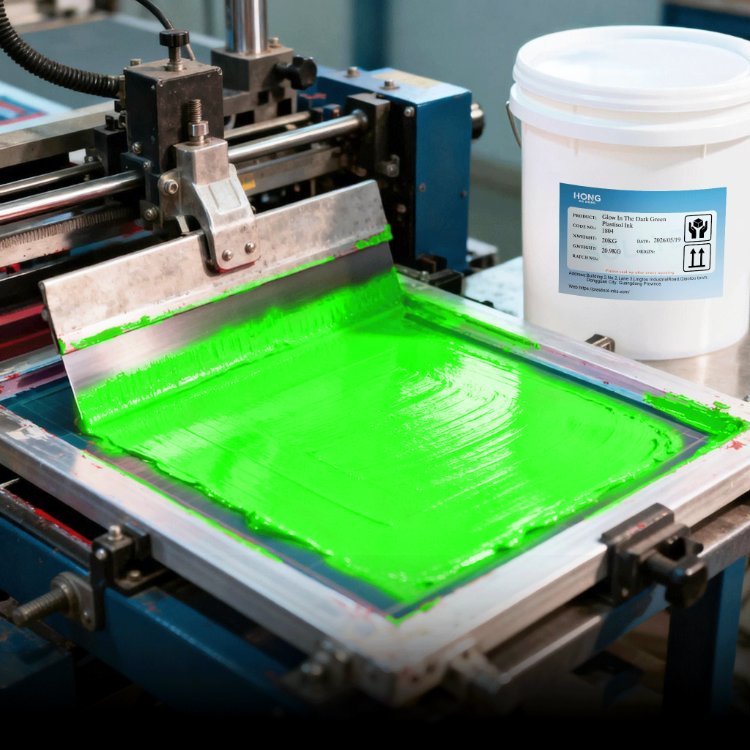
Don’t use a 230 mesh for glow ink. The pigment particles in Glow in the Dark Plastisol Ink are actually quite large. If the mesh is too tight, the “glow” stays in the screen and only the clear base goes on the shirt. I recommend an 86 to 110 mesh. You want a thick deposit. The thicker the ink film, the better the glow.
3. Squeegee Pressure
Use a medium durometer squeegee (around 70 shore). You want to lay the ink on top of the fabric rather than driving it deep into the fibers. We want a “surface deposit.”
4. Curing Without Scorch
Plastisol ink doesn’t “dry” but it “fuses.” You need the entire ink film to reach 320°F. If you have a thick layer of ink, make sure your conveyor dryer is slow enough to heat the ink all the way to the bottom. If it’s under-cured, it will crack and peel. If it’s over-cured, you might lose some of the pigment’s vibrance.
Why Buy from a Manufacturer?
As a Plastisol Ink Manufacturer, we see the industry from the inside out. When you buy from a middleman, you are paying for their marketing and their fancy office. When you work with a Screen Printing Ink Supplier like HONG RUI SHENG, you are getting ink that comes straight from the lab.
We’ve optimized our Wholesale Plastisol Ink for high-volume shops. We know that consistency is your biggest headache. If bucket #1 is different from bucket #50, your production line stops. We prevent that.
Table 2: Cost-Benefit Analysis for B2B Buyers
| Scenario | Cheap “Off-the-Shelf” Ink | HONG RUI SHENG Glow Ink |
| Initial Cost | Low | Competitive |
| Glow Duration | 15-30 minutes | 4-8 hours |
| Opacity | Low (Needs 3 passes) | High (Needs 1-2 passes) |
| Customer Retention | Low (Returns due to fading) | High (Word-of-mouth growth) |
| Safety Standards | Often questionable | Phthalate-Free & PVC-Free Options |
Real-World Case Study: The “Haunted 5K” Success
Last year, a medium-sized print shop in Ohio reached out to us. They had a contract for 5,000 shirts for a “Haunted Night Run.” Their previous supplier’s ink was failing wash tests and the race organizers were furious because the shirts didn’t actually “glow” during the night race.
They switched to our Glow in the Dark Plastisol Ink. We advised them to use our White Plastisol Ink for the underbase and a 110 mesh.
The Result:
Production Speed: They reduced passes from three to two.
Quality: The shirts were visible from 50 yards away in total darkness.
Profit: Because the ink was more efficient, their cost-per-print actually dropped by 12% despite using a “premium” product.
This is why I love this business. When you have the right tools, you stop being a “printer” and you start being a “solution provider.”
Advanced Tips for Special Effects
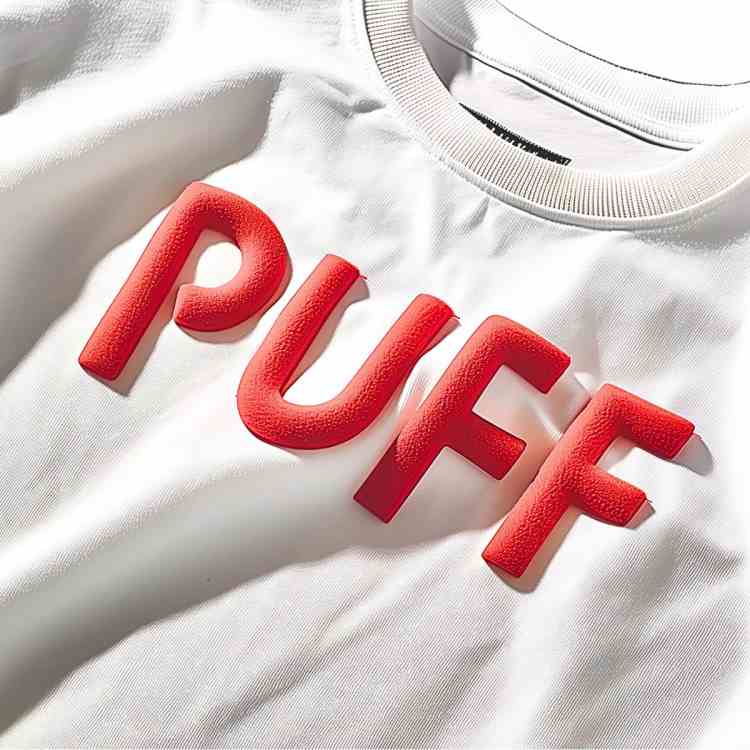
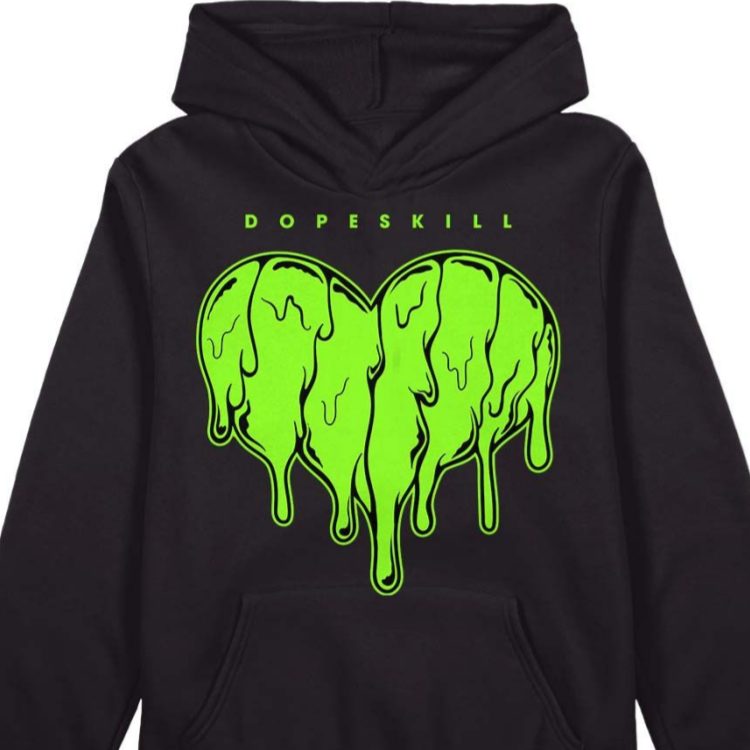
If you really want to get fancy, try mixing techniques. I love seeing our Puff Plastisol Ink used alongside the glow ink. Imagine a logo where the text is 3D (puff) and it glows in the dark. That’s a shirt someone keeps for ten years.
Also, consider Anti Migration Printing Ink if you are printing on 100% polyester or performance fabrics. There is nothing worse than “dye migration” turning your beautiful green glow into a muddy grey because the shirt’s dye bled into the ink.
FAQ: Everything You’re Afraid to Ask
1. Does the glow ever “wear out”?
Technically, the pigments can charge and discharge millions of times. Usually, the t-shirt will fall apart before the ink stops glowing. However, if you use harsh bleaches, you might damage the plastisol base.
2. Is it safe for children’s wear?
Absolutely. Our Phthalate-Free Plastisol Ink meets strict safety standards. We know safety is a huge concern for B2B clients and we take it seriously.
3. Can I mix glow ink with other colors?
You can, but be careful. If you add too much standard pigment, you will block the light from reaching the glow particles. If you want a “tint,” keep it very light.
4. Why is my ink so thick in the bucket?
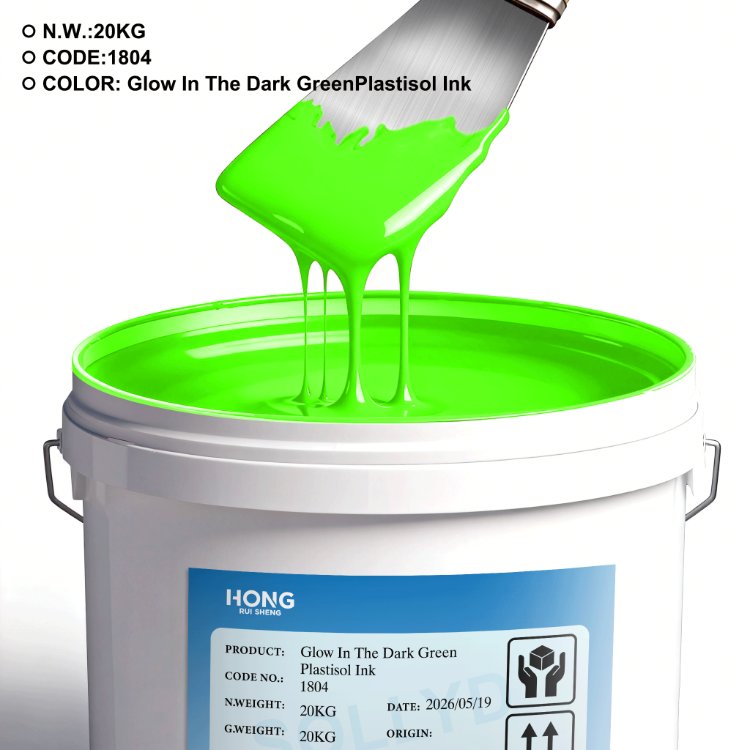
That’s the nature of the beast! Glow pigments are heavy. Give it a good stir (or use a drill mixer) to “shear” the ink and it will become creamy and printable.
5. How do I charge the ink for a demo?
Use a UV blacklight for 30 seconds. It will give it an immediate, blinding charge that looks fantastic for customer videos on Instagram or TikTok.
The HONG RUI SHENG Promise
I’ve been in the factory when the lights go out and let me tell you, seeing thousands of square feet of glow-ink-covered shirts is a sight to behold. We take pride in being a Plastisol Ink Manufacturer that cares about your final product.
If you are ready to stop playing around with “hobbyist” inks and want to move to Wholesale Plastisol Ink that actually performs, give us a shout. We don’t just sell you a bucket; we give you the technical support to make sure that bucket turns into a profit.
Your customers want something cool. You want something reliable. We provide both. Let’s make something that glows.
Related products
- Special Series
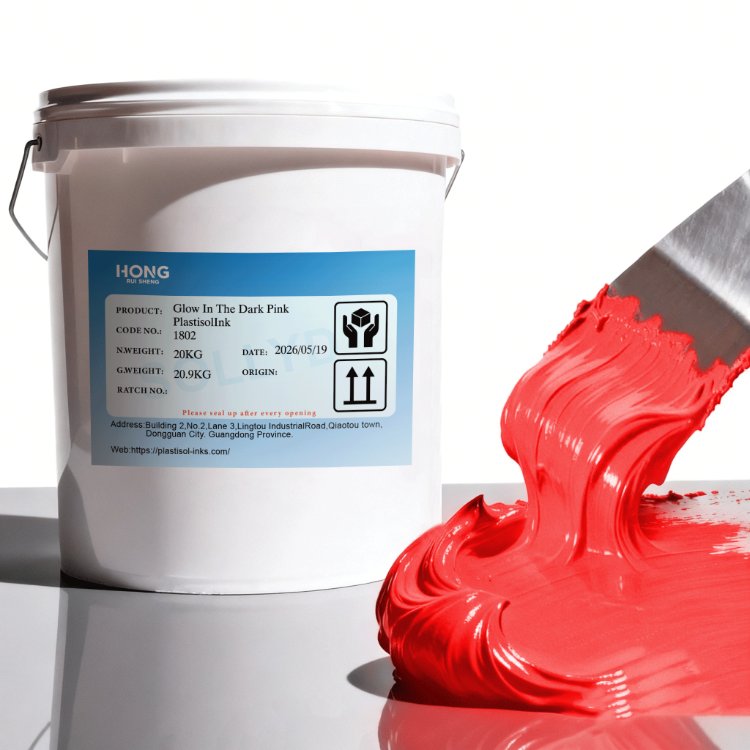
Glow In The Dark Pink Plastisol Ink
- Special Series
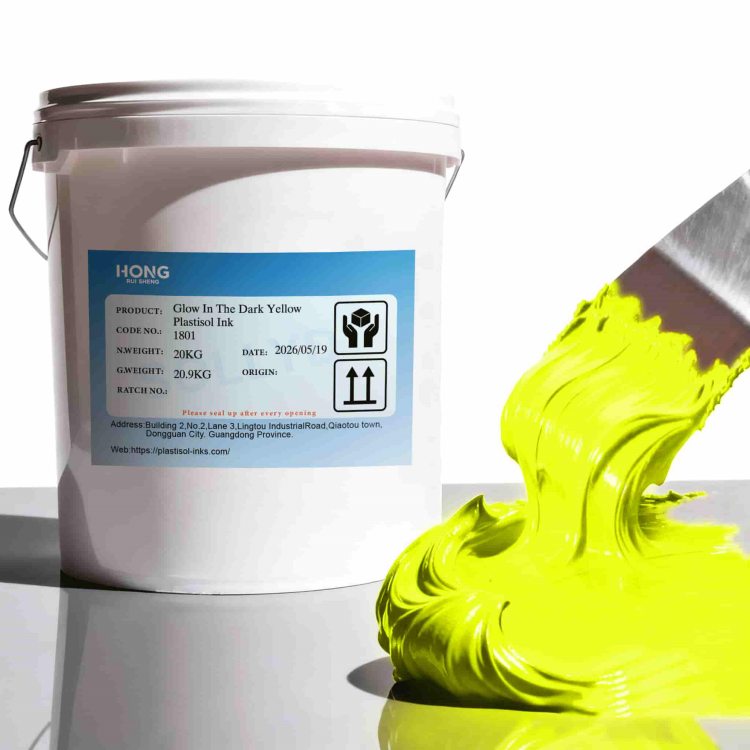
Glow In The Dark Yellow Plastisol Ink
- Special Series
Puff Plastisol Ink
- Special Series
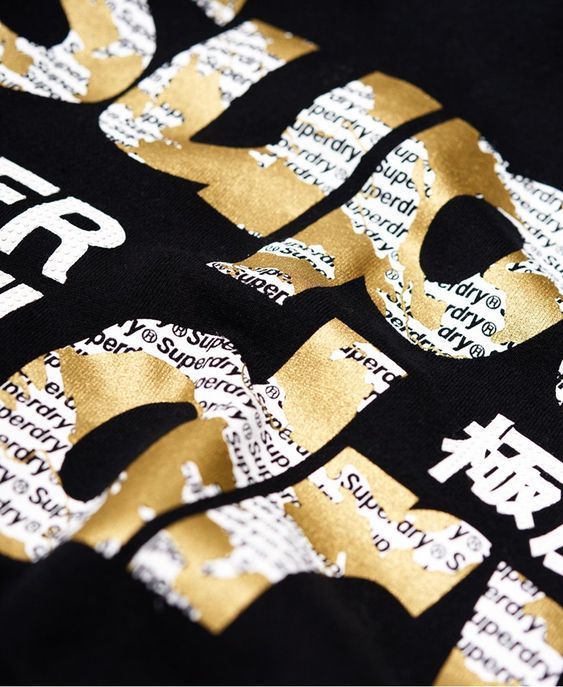
Metallic Gold Screen Printing Ink