
Here is the bottom line: if your black ink looks different at 3:00 PM than it did at 8:00 AM, you aren’t managing your thermal envelope. At HONG RUI SHENG, we’ve proven that by pre-shearing your ink for 5 minutes and locking in a 160℃ fusion temperature, you stop “false body” issues before they ruin a batch. This consistency doesn’t just look better—it saves your margins from the nightmare of customer returns.
Table of Contents
Why “True Black” Often Turns Gray During Long Runs
In a high-speed shop, a bucket of black ink is a moving target. Most operators blame the ink brand, but the real culprit is usually rheology shifts caused by platen heat.
The “False Body” Trap
When plastisol ink sits in a cool warehouse, it builds up a chemical “structure” that makes it feel like thick jelly. If you toss that straight onto a screen, the first 50 prints will be light and patchy. As the squeegee friction warms it up, the ink suddenly thins out, your “dot gain” explodes, and suddenly your fine lines are bleeding.
Managing Thermal Momentum
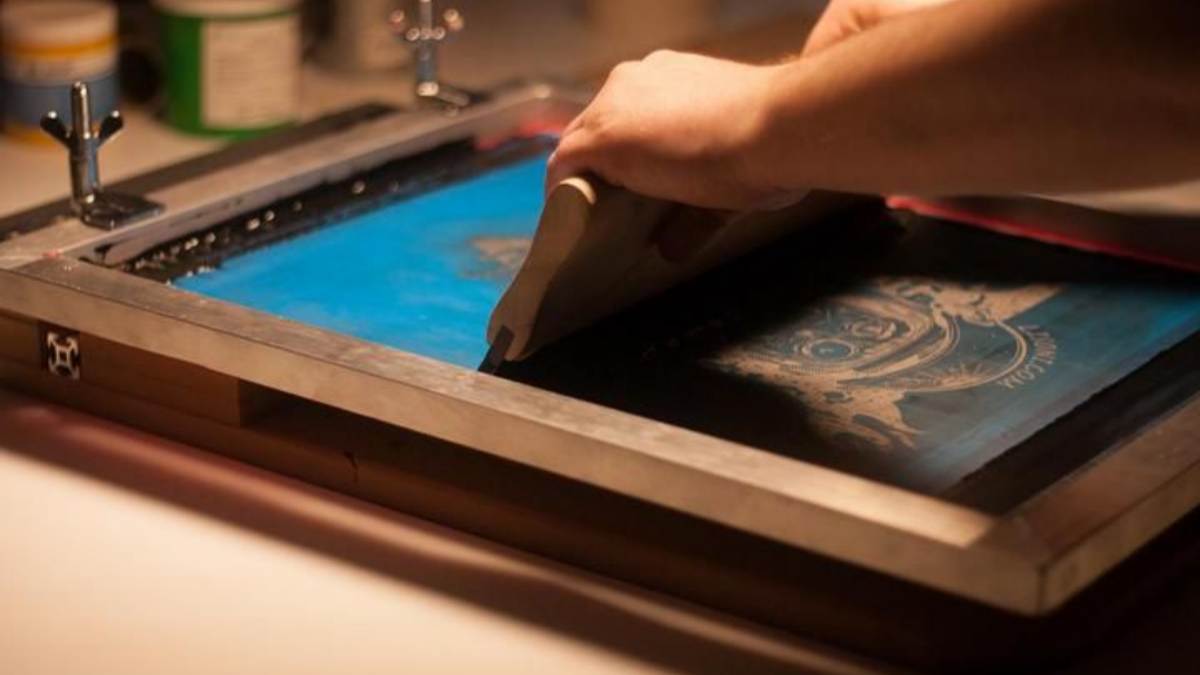
As your flash units run, your platens soak up heat. This heat transfers to the screen mesh, further thinning the screen printing ink. To fight this, we use a 70/90/70 triple-durometer squeegee. It’s stiff enough to shear the ink cleanly even when the viscosity drops mid-shift.
Expert Note: “You can’t fight physics. If you don’t account for shear-thinning, your mid-day production will never match your morning samples.”
The “Zero-Variance” Setup (Technical Data)
Don’t guess on your settings. We’ve calibrated these specs specifically for large-scale B2B production:
| Variable | Our Pro Recommendation | The “Why” |
| Mesh Count | 305 – 355 tpi | Thinner ink deposits = faster drying & softer hand. |
| Squeegee Angle | 15° – 20° | Prevents “plowing” ink into the garment. |
| Cure Temp | 160℃(320°F) | The “magic number” for total resin fusion. |
| Tension | 25 – 35 n/cm² | Prevents the mesh from sticking to the ink film. |
Real-World Practice: How We Run High-Volume Black
1. Mechanical Pre-Mixing
We never skip the drill. Using a mechanical mixer for 5 minutes “wakes up” the textile ink and stabilizes its flow. This one step reduces mid-run adjustments by nearly 15%.
2. The Blocker Move for Polyesters
Black ink on poly-blends is a recipe for “ghosting” or dye migration. To stop this, we run a gray “Blocker” underbase. This acts as a chemical shield, trapping the polyester gases before they can turn your black ink into a muddy brown.
3. Verification with Delta-E
We don’t trust our eyes after 4 hours under LED lights. We use spectrophotometers to keep the color variance (Delta-E) under 1.0. This is how you guarantee a brand owner that the shirts printed in China match the ones printed in Mexico.

Best Practice: The “Tack-Free” Flash Rule
One huge mistake is over-flashing. Your black ink only needs to be dry to the touch (104°F to 115℃) before the next station. If you bake it too hard under the flash, the next layer won’t bond. You’ll end up with a print that looks great but peels off like a sticker in the wash.
Beating the “Polyester Problem”
Dye migration is the #1 reason for B2B rejections. When heat hits polyester, the dye turns into gas.
- The Fix: Use a pvc free plastisol ink designed for low-temp curing. By dropping the dryer to 138℃(280°F), you stay below the temperature where those nasty dyes start to move.
“Temperature control isn’t a suggestion; it’s the difference between a professional print and a garment-ruining disaster.”
FAQ: Straight Talk from the Shop Floor
Q1: Why does my black print look “ashy” or fuzzy after washing?
That’s usually fibrillation. The ink is fine, but the shirt fibers are standing up through the print. To fix it, use a higher mesh count or a smoothing press. Also, make sure your plastisol ink reached a full 160℃—under-cured ink won’t hold the fibers down.
Q2: The ink is too thick to print; can I just add water?
Never add water! These are oil-based. If it’s thick, it’s probably just cold. Stir it for 5 minutes with a drill. If it’s still too stiff, use a tiny bit of curable reducer (max 5%). Anything more will make the ink “bleed” or lose its deep black punch.
Q4: How do I stop “ghosting” on white shirts?
Ghosting usually happens when hot shirts are stacked directly off the dryer. The heat and chemicals get trapped. Let the shirts cool on the belt for a few extra seconds. Switching to a pvc free plastisol ink also helps, as they tend to be less chemically volatile.
Q5: Why is the print cracking when I stretch the shirt?
The ink isn’t “cooked” all the way through. The surface is dry, but the middle is still liquid. Slow down your conveyor belt. If that ink doesn’t reach its “fusion point,” it’s going to fail the stretch test every single time.
Conclusion: Precision at Scale is Your Competitive Edge
As a HONG RUI SHENG Solutions Specialist, I’ve seen countless high-volume shops lose their margins to “preventable” color drift. In the world of B2B textile printing, black consistency isn’t just about the pigment—it’s about mastering the chemistry of rheology and the physics of the thermal envelope.
By implementing the pre-shearing protocols and thermal calibrations we’ve discussed, you move from “guessing” to predictable manufacturing. Our mission isn’t just to sell you plastisol ink; it’s to ensure that your 10,000th print is a perfect clone of your first.
Stop Chasing Consistency—Start Engineering It
If you’re tired of mid-shift viscosity shifts, “ghosting” on polyesters, or inconsistent cure rates, we are here to help you audit your workflow. We specialize in tailoring screen printing ink parameters to your specific dryer speeds and mesh setups.
Ready to eliminate color variance for good? Leave your contact details below. Our technical team will reach out within 24 hours to provide a Process Stability Audit and discuss a customized sample plan for your facility.