
Table of Contents
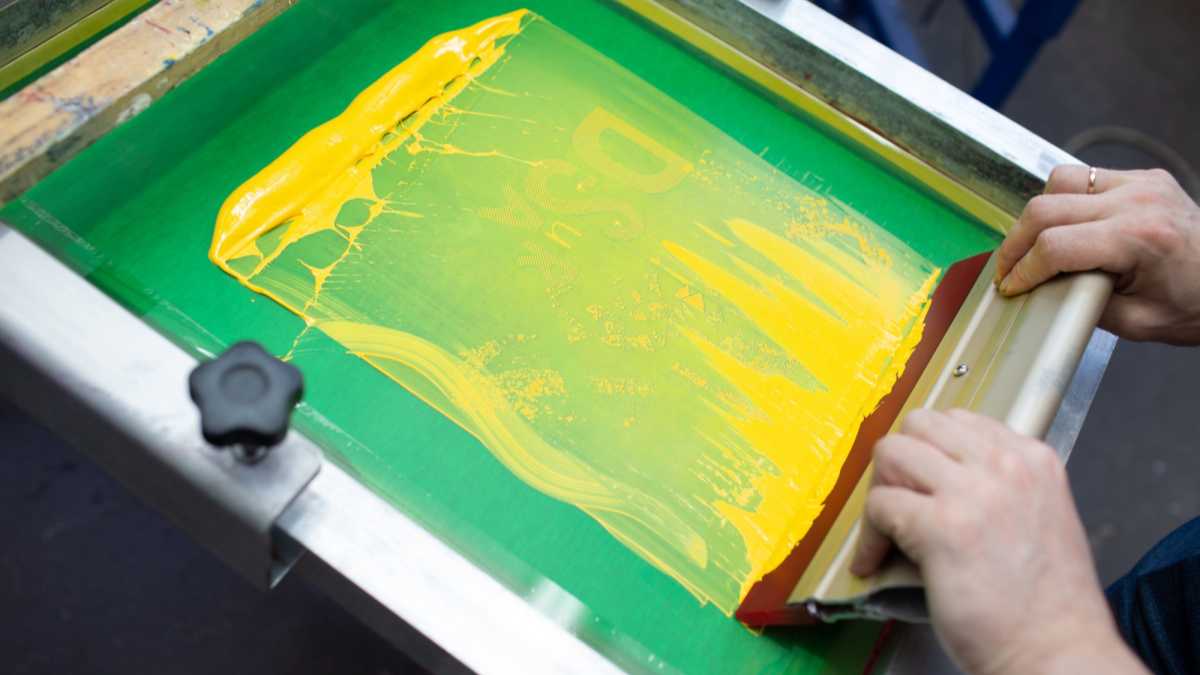
If you’re tired of plastisol ink sticking to the back of your screens, it’s time to check your screen tension and your off-contact right now. It’s usually that simple. Adjusting these settings kills that annoying “picking” effect before it ruins your designs. When you get this right, you can finally run your automatic press at full speed yet your colors will stay sharp all day long.
At HONG RUI SHENG, we see plenty of shops struggle with messy build-up. We know it kills your profit and it frustrates your printers. By following our guide, you’ll save hours of cleaning time and your customers will absolutely love the high-quality prints.
So, why is ink actually building up on your screens?
Look, when we talk build-up, we’re really talking about the daily struggles of “wet-on-wet” printing. Basically, that wet ink on the shirt decides it likes the bottom of the next screen better than the fabric. It’s a battle of tackiness—the ink on the garment is just stickier than the stuff still sitting in your screen.
Ink build-up usually comes down to three things: heat, pressure, and tension. If your pallets are too hot, the ink starts to gel on the screen and it becomes a magnet for more ink.
“Ink buildup is the most common reason for downtime on an automatic press. Most of it is preventable with correct screen setup.”
Best Practice 1: Increase Your Screen Tension
We cannot stress this enough. If your screens are loose like a wet noodle, you will have problems. We recommend using screens with at least 25 to 30 Newtons of tension.
When the screen is tight, it snaps away from the shirt the millisecond the squeegee passes. This “snap-off” action leaves the ink on the fabric and keeps the mesh clean. If the mesh stays on the shirt too long, it will pick up the previous colors. We suggest checking every screen with a tension meter before it goes on the press. Using high-quality plastisol ink on a tight screen is the fastest way to get a clean print.
The Role of Off-Contact and Squeegee Pressure
Many printers think they need more pressure to get the ink through the mesh. That is a mistake. Too much pressure pushes the ink too deep and it makes the surface of the print “tacky.”
Setting the Right Off-Contact
Off-contact is the gap between your screen and the pallet. If this gap is too small, the screen sits in the wet ink. We always set our off-contact to about 1/16th of an inch or roughly the thickness of a nickel.
For heavy garments like hoodies, you might need to go even higher. When the off-contact is correct, the squeegee only touches the shirt at the point of contact. This prevents the “smearing” that leads to massive build-up on the second and third colors.
Squeegee Angle and Hardness
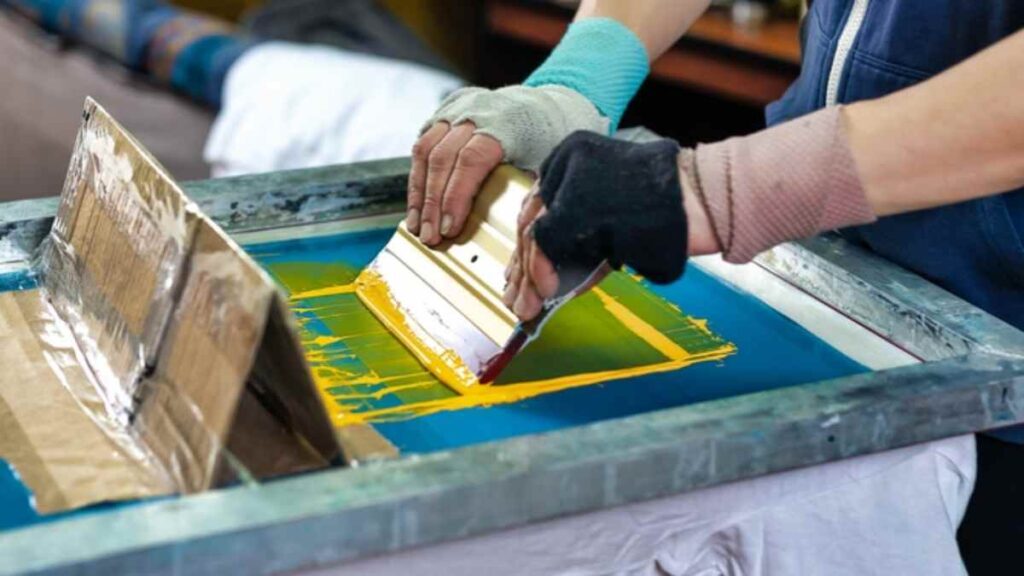
We prefer using a harder squeegee for automatic presses. A 70/90/70 triple durometer squeegee is our favorite tool. It gives you the stiffness of a hard blade but the flexibility of a soft one.
Our Pro Tip: Keep your squeegee angle at about 75 degrees. If the angle is too flat, you are pushing the ink instead of shearing it. A sharp, steep angle cuts the ink cleanly. This is vital when using our low-tack plastisol solutions because it keeps the ink layer thin and manageable.
| Component | Setting for Success | Why it Matters |
| Screen Tension | 25-35 Newtons | Ensures fast snap-off |
| Off-Contact | 1/16 inch (minimum) | Keeps screen out of wet ink |
| Squeegee Durometer | 70/90/70 or 80 | Shears ink without smashing |
| Squeegee Speed | Medium-Fast | Prevents ink from “soaking” |
Managing Temperature on Your Automatic Press
Heat is a double-edged sword. You need it to flash cure your underbase but too much heat makes the ink on your other screens get sticky.
If your pallets get hotter than 140°F (60°C), the plastisol ink in the screens above them will start to thicken. This is called “pre-gelling.” Once the ink gels in the mesh, you are done. You will have to stop the press and wash the screen.
Best Practice 2: Use Cooling Stations
If you have an 8-color press but you are only printing 4 colors, use the empty stations as cooling zones. We often place fans at these stations to blow cool air onto the pallets after they come out from under the flash unit.
Keeping the pallet temperature consistent is the key to long production runs. If the pallets are too hot, the ink on the shirt becomes like glue. It will pull the ink right out of the next screen.
“Managing heat is just as important as managing ink. If your pallets are too hot, your ink will behave like a different product entirely.”
How Our Plastisol Ink Solves the Problem
Not all inks are made the same. At HONG RUI SHENG, we formulate our plastisol ink to have a “short” body. This means it is not stringy or overly sticky.
When we designed our latest formula, we focused on two things:
- Low Tack: The ink does not want to stick to the back of other screens.
- Fast Shearing: The ink moves through the mesh with very little effort.
If you find that your ink is still too thick, you can use a tiny bit of plastisol ink additives. But be careful. If you add too much reducer, you will make the ink “transparent” and lose your color pop. We recommend never adding more than 3-5% by weight.
Step-by-Step Solution to Fix Build-Up Today
If you are in the middle of a job and you are seeing build-up, follow these steps:
- Stop the press: Wipe the back of the offending screen with a dry rag. Do not use chemicals unless you have to.
- Check Tension: Push on the mesh. If it feels like a trampoline, it’s good. If it feels like a hammock, change the screen.
- Raise Off-Contact: Give yourself a bit more room.
- Cool the Pallets: Turn down your flash cure time or increase the height of the flash unit.
- Check the Ink: If the ink feels like cold peanut butter, mix it up. HONG RUI SHENG inks are “thixotropic,” which means they get thinner as you stir them.
By applying these improving print production speed techniques, we have helped shops increase their daily output by 30%.
Common Mistakes to Avoid
We have seen it all. Some printers try to solve build-up by adding more “tack” to the pallets. They think if the shirt is stuck harder to the pallet, the screen won’t pick it up. That doesn’t work. The screen doesn’t lift the shirt; it just steals the ink.
Another mistake is over-flashing. If you flash your white underbase until it is totally dry and hot, the next color won’t stick to the shirt at all. You want the underbase to be “gelled” (tacky but not wet). It should feel like a Post-it note.
FAQ: What Our Customers Often Ask
Q1: Can I use a lubricant on the back of the screen to stop build-up?
A: Yes, some people use “screen butter” or specialized lubricants. However, we find that this is a temporary fix. It can also mess with the bond of the ink on the shirt. It is much better to fix your tension and off-contact first.
Q2: Why does my white ink build up more than my blue or red?
A: White ink contains more solids (pigments). It sits higher on the fabric. Because it has more “body,” there is more surface area for the next screen to grab.
Q3: How often should I check my pallet temperature?
A: We check it every hour. Use an infrared temp gun. If you see it creeping above 150°F, you need more cooling or less flash time.
Q4: Will adding reducer stop the build-up?
A: It can help by making the ink less “tacky.” But don’t go overboard. Too much reducer can lead to “ghosting” or dye migration on polyester fabrics.
Q5: Does the mesh count matter for build-up?
A: Yes. Higher mesh counts (like 230 or 305) lay down a thinner layer of ink. Thinner layers are much less likely to build up on the back of your screens.
Summary of Expert Advice
In the end, running a clean automatic press is about control. You must control the tension of your mesh. You must control the distance of your off-contact. And you must control the heat of your pallets.
At HONG RUI SHENG, we provide the plastisol ink that stays stable under these conditions. We want you to spend your time printing, not cleaning screens. If you use the right tools and keep your screens tight, you will win the battle against ink build-up.